




Choice Overload Is Killing Marketing — Here’s What Actually Breaks Through
By Kim Lawton, co-founder, Enthuse
A buyer opens yet another comparison tab, scans a grid of nearly identical features, and then … does nothing. No click. No conversion. No decision.
For an industry obsessed with attention, this is the quieter problem we don’t talk about enough: People aren’t struggling to find options. They’re struggling to choose between them.
And in that gap between consideration and action, most marketing efforts stall out.
The Real Bottleneck Isn’t Awareness
Think about the last time you tried to choose a streaming service, a project management tool, or even a coffee brand. At some point, your brain just stops. You either go with what you know, or you walk away. A survey of 2,000 adults found that the average person makes roughly 122 decisions a day. That’s something B2B buyers feel every single day, and the stakes are considerably higher than deciding which coffee to order.
Every touchpoint marketers design, every campaign we launch, every “next step” we suggest adds another decision to an already crowded mental queue: click or ignore, shortlist or skip, trust or keep looking.
When everything looks polished and sounds credible, buyers don’t lean in. They hesitate. Or worse, they default. They look for the option that feels safest to defend internally, and the brand that creates that sense of certainty first usually wins.
The uncomfortable truth is that more information hasn’t made decisions easier. It’s made them harder to finalize.
When Comparison Breaks Down, Experience Takes Over
There’s a reason you trust a restaurant recommendation from a friend over a five-star review from a stranger. Firsthand experience changes how we process information. It makes abstract decisions concrete.
The same dynamic is playing out across B2B buying journeys. When a buyer participates in something real — a working session, a hands-on demo, a conversation that isn’t just a pitch in disguise — they stop toggling between options and start recognizing fit.
That shift is happening against a backdrop of growing complexity. Sixty-five percent of technology buyers said the purchase process is getting more complicated, and nearly all report needing more support from vendors along the way. The biggest friction points? Evaluating solutions and defining requirements — the exact moments where decisions tend to stall.
What buyers need is help making sense of the information already in front of them, not more content.
Participation Clarifies What Messaging Can’t
The temptation in B2B is to use every buyer interaction as a chance to say everything, to cover every product, address every possible objection, and leave nothing on the table. That approach tends to backfire. People leave more confused than when they arrived.
The experiences that actually move decisions forward are built differently. They start with a narrower focus: What does this person need to feel confident right now?
That requires restraint. It means prioritizing relevance over completeness and clarity over coverage. It also shifts where value comes from. Someone who understands the category, listens carefully, and connects the dots in real time is worth more than any amount of well-designed content.
What Real Participation Looks Like in Practice
Participation isn’t a gated webinar or a clickable product tour. Those are formats. What matters is what changes because of the interaction.
It’s the distributor rep who walks into a sales conversation with genuine category knowledge, not because they skimmed a one-pager, but because someone invested the time to teach them. It’s the buyer who returns to their internal team and reframes the problem, not repeating your pitch, but explaining what they now understand differently.
And in B2B, that confidence has to travel. Decisions rarely sit with one person. The buyers who become your advocates inside their own organizations are the ones who feel like you genuinely helped them, not just sold them.
If you’re thinking about leaving it up to AI to teach your team, one word of advice: don’t. While AI-driven solutions offer speed, efficiency, and convenience, especially in the early stages of the sales process, recent analysis suggests that the demand for genuine human engagement is far from diminishing. In fact, Gartner predicts that by 2030, 75% of B2B buyers will prefer sales experiences that prioritize human interaction over AI.
Speed and scale have their place. But when the decision matters, people still look for people.
Fewer Choices Isn’t the Answer — Better Guidance Is
No one is asking for fewer options. What they want is a clearer way to navigate those options. The brands that do this well start with what matters most to the specific problem at hand. They offer one or two relevant paths, clearly explained, grounded in the buyer’s reality. The rest is still there. It’s just not competing for attention upfront.
That approach sounds simple, but it requires discipline to hold back information that could be shared, and confidence that clarity early will create momentum later. It also requires investing in people who know how to guide, not just present, who ask better questions before offering answers, and who know when to slow down.
Helping someone make a good decision is a far more effective long-term strategy than pushing them to make a fast one.
The Brands That Break Through
The next phase of marketing will be defined by who removes the most friction from decision-making.
In a market full of noise, clarity is what stands out. The brands that invite participation, that teach instead of tell, and that guide instead of overwhelm are the ones that will move buyers forward. Not by simplifying their offering, but by simplifying the path to understanding it.
Because when a buyer feels confident in the decision, momentum follows. And in a market defined by hesitation, momentum is what actually converts.
About the Author
Kim Lawton, co-founder of Enthuse — a New York City-based marketing agency that teaches the world to love your brand — advocates for B2B marketers to shift from traditional sales and marketing tactics to an education-led marketing approach. Kim has 25 years of proven experiential operations and marketing experience spanning branded consumer products, and she has cross-functional expertise in both creative development and marketing campaign activation, measurement, and management.
[GU1]
should be Kim L.
[GU2]
Enthuse
You May Also Like
The Power of the Transaction
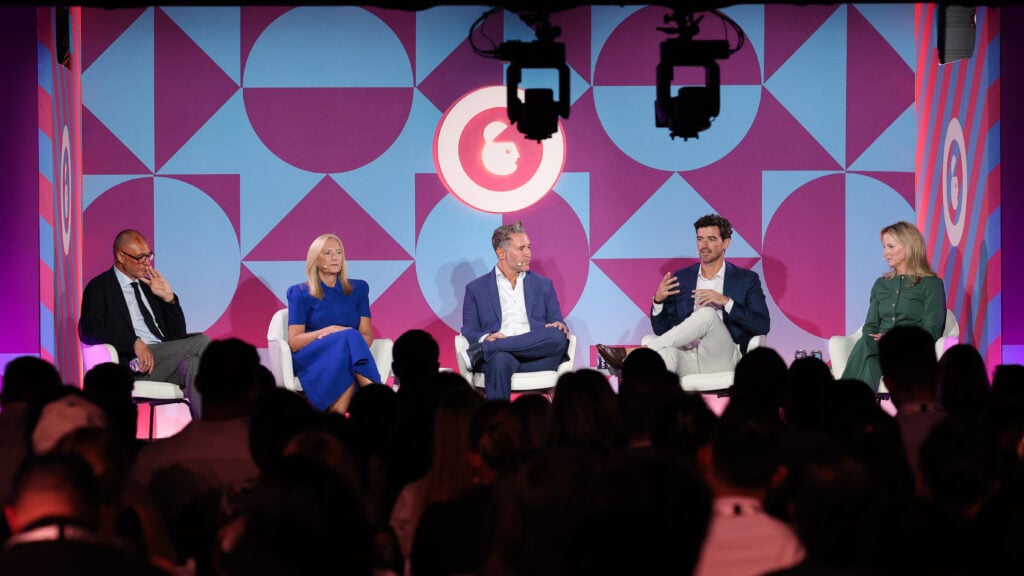
A click can suggest interest, but a transaction shows where someone chose to spend. In our Advertising Week New York session, “The Power of the Transaction,” the leaders behind Citi Commerce Media discussed how purchasing data can help brands identify audiences, deliver relevant offers and assess what happens after an advertisement.

How to Find Authentic Experts in a World of Ai-Generated Content
As AI-generated content floods the internet, how do we know who’s actually an expert anymore? Why businesses need better ways to distinguish genuine human expertise from AI-generated noise.
Brands Can Scale Creator Content Without Sacrificing Authenticity
With platforms and technology providers promising easier discovery, faster campaign setup, and more efficient distribution, creator marketing is starting to look more like the rest of digital advertising. For brands managing a growing number of creator relationships and assets, the appeal is obvious. But it also raises a reasonable concern.