




The TikTok Shop Halo Effect
By Ethan Kramer, Go Fish Digital, Senior Vice President
Much of the marketing world’s attention has fixated on one question: can TikTok become a meaningful commerce platform? With the rapid evolution of TikTok Shop, the answer increasingly appears to be yes. Brands are seeing transactions, creators are driving conversions, and the platform is investing in closing the loop between discovery and purchase.
But focusing solely on on-platform sales misses the bigger story.
The true strategic value of TikTok Shop may not lie in what happens within the app—but in what happens after a consumer leaves it. What’s emerging is a powerful “halo effect,” where TikTok-driven discovery fuels demand across the broader digital and physical commerce ecosystem. For brands, this residual impact could ultimately prove more valuable than the transactions TikTok captures directly. The industry has been optimizing for what’s easiest to measure, which has been Gross Merchandise Value and not what is driving incremental growth.
At its core, TikTok remains a discovery engine. Consumers encounter products not through intentional search, but through content—often delivered by trusted creators. That moment of discovery initiates a consideration phase that plays out across multiple channels.
One of the most immediate signals is search behavior. As TikTok impressions increase— through organic content, creator partnerships, or Shop integrations—brands often see a corresponding lift in branded search queries. Consumers who first encounter a product on TikTok frequently turn to search engines to validate what they’ve seen.
This shift from passive discovery to active intent is critical. Branded search is fundamentally different from generic category search. It indicates that a consumer is no longer just browsing. TikTok is not just driving awareness; it is accelerating movement down the funnel. The same dynamic plays out on marketplaces like Amazon. While TikTok Shop enables in-app purchasing, many consumers still prefer the familiarity and convenience of established platforms.
Brands often observe increased branded searches and conversions on Amazon following TikTok exposure. From a narrow attribution perspective, this might appear as leakage. In reality, it is incremental demand generation. Thus, it is important to have a trusted agency partner with deep Search experience rather than throwing in with a newfangled “TikTok agency”, who struggles to measure Search lift.
TikTok may introduce the product, but it does not own the entire path to purchase—and it doesn’t need to in order to deliver value.
According to Cruva, a top TikTok Shop growth tool, one brand generated $6.70 in off-platform revenue for every $1 of TikTok GMV over a 90-day stretch. Across roughly 9M views, that translated to about $56K in halo sales flowing to Amazon and Shopify.
Beyond search and marketplaces, TikTok Shop also creates downstream effects in paid social. One of the platform’s advantages is its ability to generate a high volume of creative assets and audience signals. Brands working with creators can rapidly test messaging and content at relatively low cost. The best-performing concepts can then be repurposed across other channels, including Meta.
At the same time, user interactions with TikTok content—clicks, searches, engagement—feed into the broader digital advertising ecosystem. These behaviors help inform targeting and optimization elsewhere, strengthening performance on other paid channels. TikTok doesn’t just produce demand; it enhances the efficiency of a brand’s media mix.
Perhaps the most compelling manifestation of the halo effect, however, is in retail.
Long before TikTok Shop existed, the platform was already driving retail outcomes. The phenomenon of “TikTok made me buy it” demonstrated the app’s ability to move product off shelves, often leading to out-of-stock scenarios driven by viral demand. TikTok Shop builds on this by amplifying exposure through creators and shoppable content.
As brands scale their presence on TikTok Shop, they are seeding demand that extends into physical stores. Consumers who encounter a product on TikTok are more likely to recognize it later in retail. When faced with a shelf full of options, shoppers gravitate toward what they know, especially when reinforced by a trusted creator.
This dynamic also shifts the balance of power between brands and retailers. Retail buyers are increasingly paying attention to TikTok trends, seeking out products with momentum on the platform. For brands, this creates leverage—opening doors to partnerships and accelerating distribution. In other words, TikTok Shop is not just a sales channel—it is a signal. It tells the market which products are resonating.
Of course, TikTok has a vested interest in keeping transactions on-platform. The company has introduced guardrails to discourage directing users elsewhere and continues to invest in making in-app purchasing more seamless. Over time, these efforts may reduce some off-platform flow.
But even as TikTok works to close the loop, the halo effect is unlikely to disappear. Consumer behavior is too ingrained, and the broader commerce ecosystem too entrenched, for any single platform to fully contain the journey.
TikTok Shop should not be evaluated in isolation. Its true impact cannot be captured by platform-native metrics alone. Instead, it should be understood as a catalyst—one that drives discovery, shapes consideration, and amplifies demand across channels.
The brands that win will be those that embrace this holistic view. Rather than asking how much TikTok Shop sells, they should ask how it influences everything else. Because in the end, the most powerful effect of TikTok Shop may not be what it captures—but what it creates beyond its borders.
You May Also Like
The Power of the Transaction
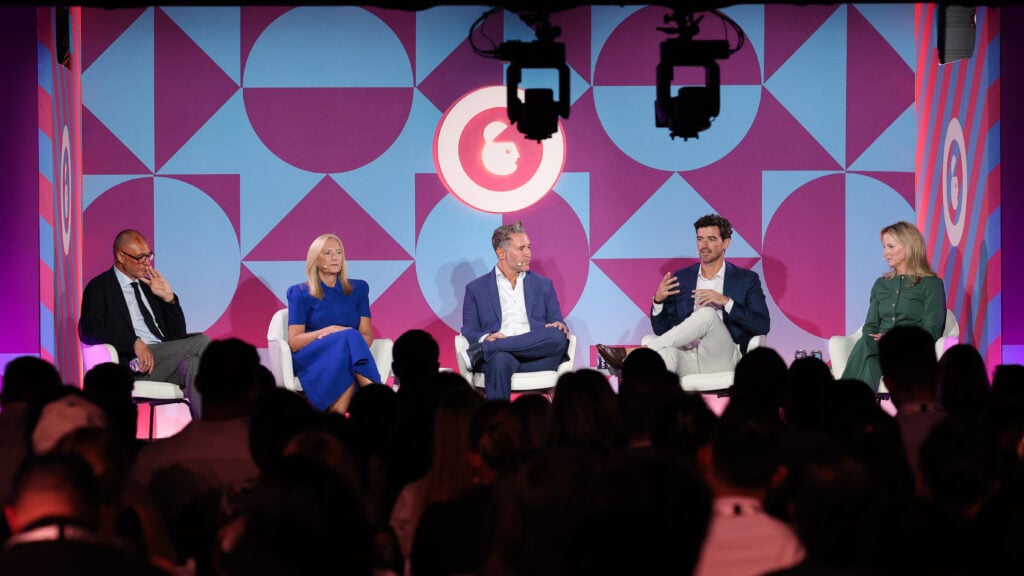
A click can suggest interest, but a transaction shows where someone chose to spend. In our Advertising Week New York session, “The Power of the Transaction,” the leaders behind Citi Commerce Media discussed how purchasing data can help brands identify audiences, deliver relevant offers and assess what happens after an advertisement.

How to Find Authentic Experts in a World of Ai-Generated Content
As AI-generated content floods the internet, how do we know who’s actually an expert anymore? Why businesses need better ways to distinguish genuine human expertise from AI-generated noise.

Brands Can Scale Creator Content Without Sacrificing Authenticity
With platforms and technology providers promising easier discovery, faster campaign setup, and more efficient distribution, creator marketing is starting to look more like the rest of digital advertising. For brands managing a growing number of creator relationships and assets, the appeal is obvious. But it also raises a reasonable concern.