
By Andrew Spray, Managing Director, Omnicom Precision Marketing
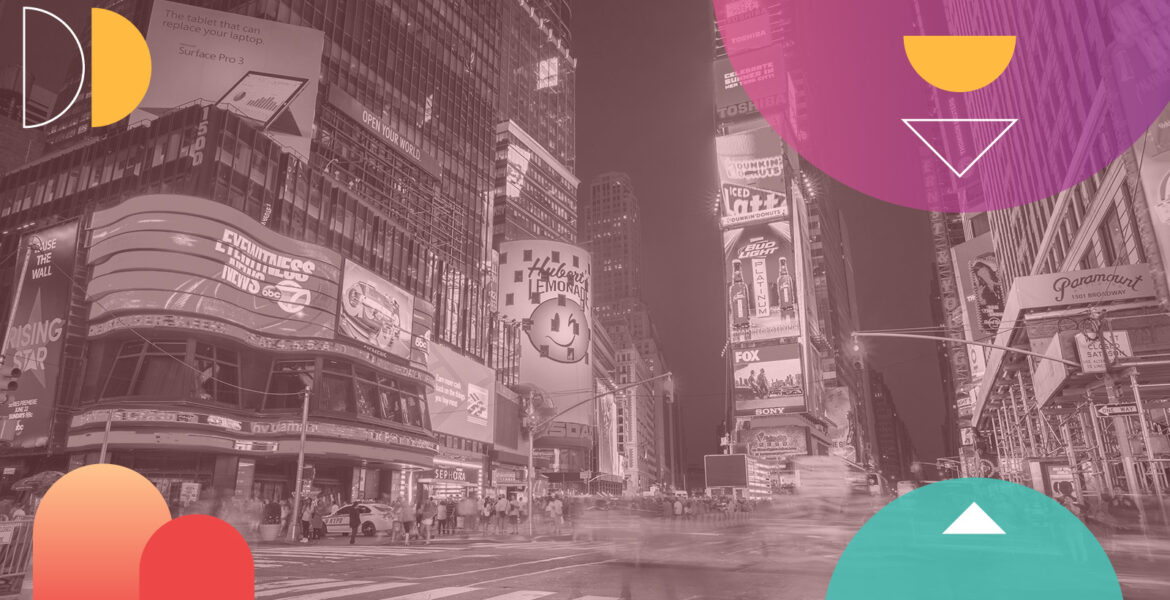
On a rainy Tuesday in Times Square, a crowd of tourists huddles under cheap umbrellas to avoid gray puddles. They are looking anywhere but at the ads above them. Suddenly, a massive screen changes. It does not show a sun-drenched beach or a generic logo. Instead, it cracks a joke about the local downpour and offers a live countdown to the nearest dry Uber.
In that moment, the billboard stops being a line item on a media plan and becomes part of the environment. No app click is required. No swipe is necessary. It is just the right message at a miserable time.
Digital out-of-home (DOOH) has moved beyond the realm of future speculation. The technology is already here, but the creative strategy remains stuck in the previous century.
The Rebirth and Identity Crisis of the Billboard
DOOH is the only medium that exists in our shared physical reality. It occupies the intersections and transit hubs where people actually live. Unlike the internet, which is a swamp of misinformation and skip buttons, a physical screen is a trusted and un-fakeable canvas.
The problem is that most brands are squandering this trust. They take a static image meant for a magazine, slap it on a high-definition LED screen, and call it a digital strategy. It is the equivalent of buying a Ferrari just to listen to the radio in the driveway.
Storytelling with a Pulse
Dynamic content is most powerful when it delivers contextual relevance instead of a standard product pitch. Consider the recent Uber campaign in the UK. Instead of a generic call to request a ride, the screens functioned as a local utility. In London, they used regional dialect. In Manchester, the tone shifted to match the city.
The real impact came from the utility of the data. A traveler standing on a freezing platform seeing a screen tell them exactly how many minutes away their warm ride is feels a sense of relief. That is not an advertisement. It is a service. It transforms a brand from a giant corporation into a helpful presence. That breakthrough happens when data stops being a spreadsheet and starts being a story.
The AI Behind the Curtain
To make this happen, the industry must stop treating AI like a creative director and start treating it like a specialized stagehand.
AI should not be responsible for the soul of a brand. Instead, it is the unseen hand in the rafters, instantly resizing art for a thousand different screen ratios and swapping out headlines based on whether it is freezing or sweltering outside.
AI allows the human creative director to shine by handling the manual labor of versioning in real-time. It is the engine that ensures brand integrity stays intact while the message stays nimble.
Why Context Beats Tracking
We have all had that unsettling feeling when an ad for shoes follows us from a private email to a social feed. It feels invasive. DOOH avoids this by focusing on context rather than identity.
Think of it like a party host. A good host knows it is raining and offers you a coat. A creepy host follows you into the kitchen and whispers that they know you bought blue socks three days ago. By sticking to environmental cues like crowd density, weather, or traffic, DOOH remains relevant without making the audience feel like they are being watched by a digital stalker.
The High Cost of Industry Lethargy
The biggest hurdle to adoption is not a lack of technology. It is a lack of ambition. Many brands are simply afraid of innovation or too comfortable with legacy media planning to change.
The world is full of smart screens being fed dumb content. Fragmented infrastructure is a poor excuse for a lack of imagination. Marketers are still buying loops and time slots when they should be buying specific environmental triggers. If a billboard does not know it is Friday night in a crowded entertainment district, the brand is just wasting electricity on a very expensive poster.
The Move from Screens to Stories
The next leap for DOOH will not be a tech breakthrough. It will be a mindset shift. We need to stop seeing screens as inventory and start seeing them as living, responsive extensions of a brand’s personality.
A smart, timely billboard speaks volumes. It can react, adapt, and connect in a way no 15-second skipable video ever will. It is time the industry stopped playing it safe and started making the most of the moment.
About the Author
Andy Spray is the Managing Director of Artbot UK, part of Omnicom Precision Marketing Group, where he also oversees the company’s global dynamic digital out-of-home (DOOH) proposition. He helps brands fuse creativity, data, and technology to deliver contextually relevant experiences in public spaces. With a background spanning media investment, content strategy, and digital innovation, Andy brings a holistic perspective to how storytelling and technology intersect.