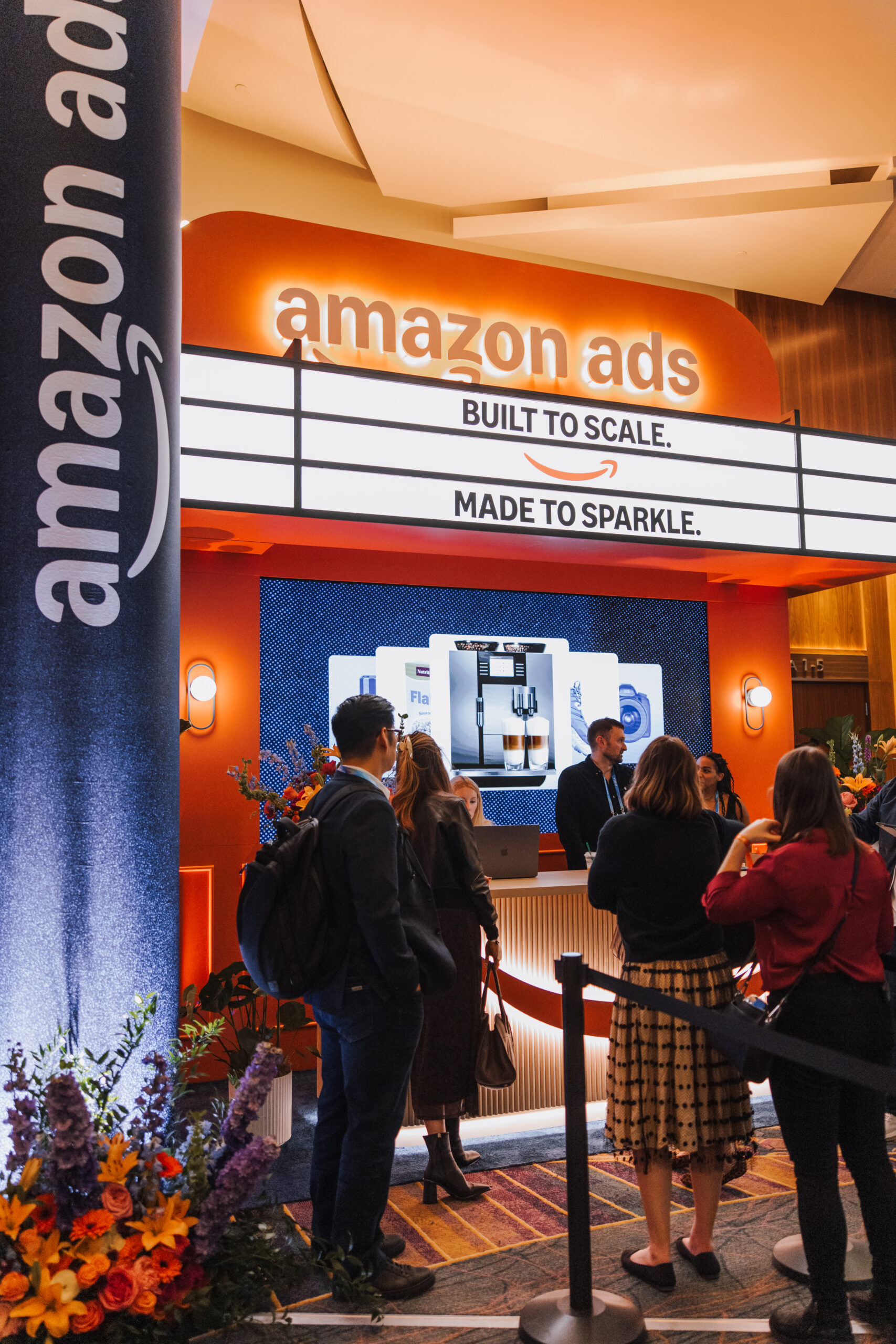
Here’s what that looks like from the inside.
From emerging technologies to evolving consumer behaviors and everything in between, we’ve brought together leaders across the advertising landscape to offer their practical insights and bold predictions on what’s next at the intersection of advertising, technology, and media.
These aren’t theoretical frameworks or distant possibilities; they’re a look at what’s ahead from those who are creating the next generation of solutions.
AI will work its way throughout the advertising landscape to deliver more than efficiency.
AI is already reshaping the advertising industry, with companies of every shape and size looking for ways to reduce redundancy, automate repeated tasks, and find cost savings. But the AI revolution stands to bring significantly more to the table if viewed as an opportunity to focus on delivering better creative and more strategic work.
During a panel earlier this year, Monks brought together top executives to discuss how practical applications of AI can go far beyond automation towards enhancing creativity, in turn creating more opportunity for smaller brands. “Bigger brands have bigger budgets and smaller brands have smaller budgets, and traditionally couldn’t do traditionally what the bigger brands were doing. Now, AI is such an easy-access tool and they can use AI to get the same kind of results” shared Sir Martin Sorrell, Chairman, S4 Capital.
Sarah Iooss, Director of Global Agency and Global Twitch Ads, Amazon Ads, highlighted how this goes from theory to reality by sharing how a campaign for Diamond Foods with Monks showcased the creative, efficient, and democratizing powers of AI. Driving results for brands regardless of the size of brands: “it was a smaller campaign, but we were able to, using AI, make a lot of different creative, test it, learn about what really resonated. And we saw the results a CFO would want to see: reduction in the amount of money it took to acquire new consumers. So you see an improvement in ROAS and a lot of activity on the detail page. But more importantly, you see the full-funnel campaign planning that will be able to use all of these signals.”
With creative production no longer the bottleneck, marketers can shift their focus upstream to more strategic questions about audience targeting and funnel optimization.
Upfront investments and planning will fundamentally change as brands better understand their total addressable market and guide consumers down the marketing funnel.
Upfront commitments have historically been founded upon reach and frequency targets, with lower-funnel results estimated based on loose prediction models. Clearer pictures of both total addressable market and data-backed propensity indicators by audience segment have the potential to disrupt this, allowing brands to add authenticated audience insights to their campaign planning.
During an executive panel, leaders from Omnicom, The Clorox Company, and Amazon Ads shared how the evolution of audience signals has allowed them to take this from hypothetical to reality, launching campaigns optimized to custom built, highly responsive Amazon Ads audiences developed in AWS Clean Rooms using RealID’s 10,000+ identity attributes and Amazon’s trillions of signals.
The results? Improved planning, measurement, and delivery across display ads on and beyond Amazon, with campaigns deployed to custom audiences built on user-level responsiveness scores specifically for The Clorox Company. “Ultimately, this is real-time, continuous, bidding capability that is giving you 1:1 marketing at mass scale” said Duncan Painter, CEO, Omni.
Customer-first solutions will take the lead when addressing streaming TV challenges.
Armed with these sophisticated audience insights and predictive models, brands face a new challenge: executing campaigns across a fragmented streaming landscape where their precisely targeted audiences are scattered across dozens of platforms. The solution lies in rethinking how streaming TV itself is bought and measured.
The challenges with streaming TV are known: too many content options, difficult identity resolution, scattered viewership, scale with waste, and complex cross-platform reporting.
A recent fireside chat with Pieter de Zwart, Director of Software Development at Amazon Ads, and Carl Goedjen, President of Global Overview, De Zwart highlighted the wide variety of Amazon Ads solutions that address these concerns, and a throughline became clear: keeping the customer in mind at all times creates ideal outcomes. Strategic partnerships with streamers like Roku, Disney+, Netflix, enable advertisers to build, optimize, and analyze campaigns that connect with customers across content sources they’re already using through a single operational system.
Adding to this are interactive video ads, which transform video assets into actionable experiences that deliver for both customers and brands. Audiences get to decide if they want to interact and, if so, how (phone vs. remote, add to Amazon shopping cart vs. learn more) – all without ever leaving their viewing window – offering deeper customer engagement and access to lower-funnel activity.
Goedjen shared a campaign example from Renzo to highlight how a full-funnel campaign leaning into these signals drove success. “Consumers are buying immediately without going through the rest of the funnel. I think that speaks to, as we talk to monetizing media more and increasing scale, we have to remove those barriers because it works for the smaller players and it works for the larger ones.”
Viewers get better viewing experiences and easier purchases, and advertisers get better ROI and results, creating a win-win for both parties.
When the technical complexity of cross-platform delivery is solved, brands can focus on what matters most: creating ad experiences that viewers actually want to engage with.
Ads will become invitations to engage instead of perceived content interruptions.
Building upon this theme, Amazon Ads and Publicis Media have unveiled new research into the efficacy of interactive video ads, highlighting the power of interactive media. The study, conducted by Latitude amongst over 7,800 people and 10 brands across the US, revealed that 78% of viewers found interactive video ads more attention-grabbing than standard video ads and, even without the option to directly purchase a product, interactive ads drove 4-percentage point lift in brand opinion.
Aligning a brand’s objective with a specific call-to-action and interactive experience is the secret sauce to avoiding a gimmick and truly enhancing the experience. The key is to deliver on what viewers naturally want to do next, whether that’s buy now, learn more, or save for later.
When it comes to messaging, the research highlighted the need for ease: keep it simple, have a clear message, and consider the content (hint: comedy and action were found to be ideal genres for interactivity) to create seamless alignment. Beyond that, allowing viewers to interact without leaving their viewing environment further encourages lower-funnel actions.
The research validates the customer-first approach: when technology removes friction for both viewers and advertisers, everyone wins. “Partners and brands who master interactive formats will lead the market tomorrow,” emphasizes Megan Halscheid, VP, Global Data Intelligence, Publicis Media. “We’re seeing fundamental shifts in how consumers want to connect with brands on streaming TV, and this research helps us understand how to deliver experiences that respect viewer choice while driving measurable business results.”
There’s power in partnership
The future of marketing isn’t something that will arrive—it’s being built right now, and it requires partnership.
Modern advertising’s complexity demands specialized expertise that no single company can deliver alone. Partners bring the strategic insight, technical capabilities, and creative excellence that help brands navigate this evolving landscape.
Ready to accelerate your advertising success? Explore the Amazon Ads Partner Network to find the right partner for your business at amazonads.com/partner.