
By R. Larsson, Advertising Week
In an era where brands and agencies are under increasing pressure to prove social impact isn’t just performative, partnerships that combine community, culture and long-term commitment are beginning to stand out from the noise.
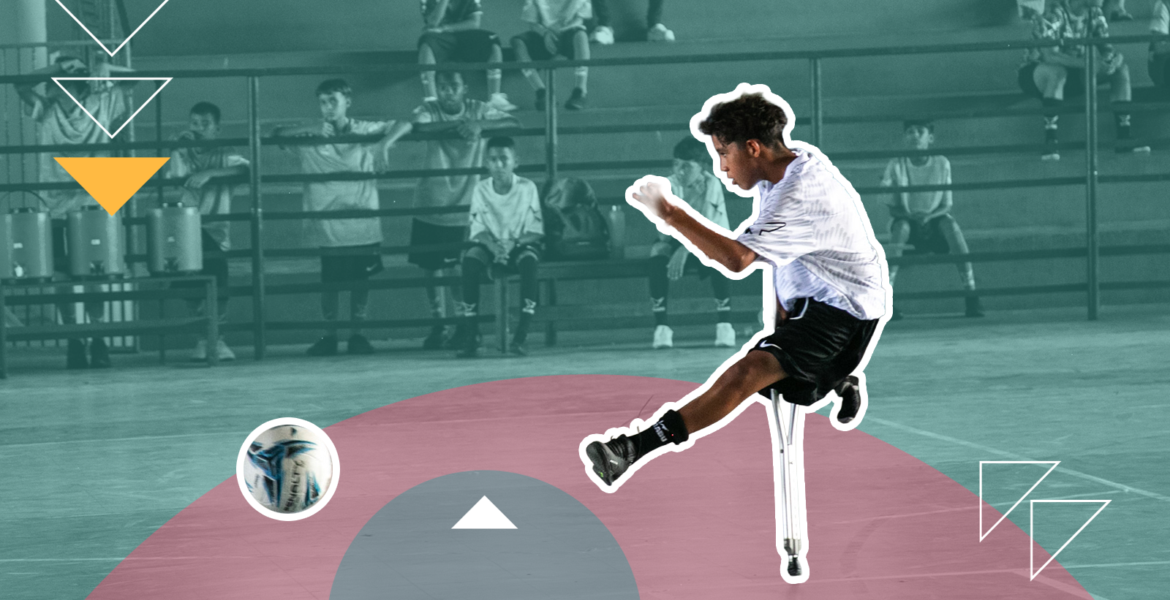
That’s the thinking behind a new collaboration between We Are Social and KLABU — a non-profit organization building community-led sports clubs in refugee camps around the world. The partnership is designed to help KLABU scale its global awareness and membership ambitions through a social-first strategy rooted in participation rather than passive visibility.
At its core, KLABU operates on a deceptively simple premise: sport creates belonging. Through a €1-per-month membership model and the sale of branded sportswear, the organization funds equipment, facilities and training programs for displaced communities globally. But the larger ambition is considerably more ambitious — positioning KLABU as the world’s largest sports club, connected not by geography, but by shared purpose.
That mission arrives at a moment when the relationship between social platforms and real-world community is evolving rapidly. For years, marketers framed social media primarily as a distribution engine — a place to drive awareness, impressions and engagement metrics. Increasingly, though, the most resonant campaigns are becoming participation systems. They invite people to join, contribute and identify with something larger than themselves.
In many ways, KLABU sits at the intersection of several larger cultural shifts reshaping both marketing and nonprofit communications.
First, audiences — particularly younger consumers — are showing growing skepticism toward transactional cause marketing. Visibility alone no longer feels sufficient. People want measurable contribution, authentic community and transparent impact. Membership models, recurring micro-contributions and creator-led advocacy have emerged as more sustainable ways to build long-term engagement than one-off donation drives or awareness campaigns.
Second, sport itself has become one of the most powerful global cultural connectors. Brands across categories have increasingly gravitated toward sports partnerships not simply because of reach, but because fandom creates emotional infrastructure. It creates rituals, identity and shared language. KLABU’s model effectively reframes refugee support through that same lens — not as charity, but as participation in a collective club culture.
And third, the creator economy continues to reshape how movements scale online. Traditional institutional messaging often struggles to travel organically across platforms like TikTok, Instagram and YouTube. Community-led storytelling, athlete partnerships and creator advocacy tend to outperform polished corporate communications because they feel human, social-native and emotionally immediate.
That’s where We Are Social’s involvement becomes strategically significant.
Rather than approaching the relationship as a traditional campaign engagement, the agency is supporting KLABU on a pro-bono basis with a broader infrastructure play: building a long-term social identity capable of sustaining global growth. The partnership will include the development of a campaign platform, social media playbook, and influencer and athlete engagement strategy designed to help KLABU define a more cohesive and recognizable voice across markets.
The collaboration officially launches ahead of World Refugee Week with a social-first campaign focused on converting awareness into active membership and tangible impact.
For agencies, the partnership also reflects a broader evolution in how creative firms increasingly view purpose-driven work. Historically, pro-bono projects often lived adjacent to the core business — meaningful, but siloed. Today, socially-led agencies are increasingly integrating cultural impact work into the same strategic systems they use for brands: audience development, creator ecosystems, community architecture and platform-native storytelling.
That shift matters because social impact campaigns now compete within the same attention economy as entertainment, sports and creator content. The organizations that succeed are often the ones that understand audience behavior as deeply as any consumer brand.
As Sam Grischotti, Managing Director of We Are Social Amsterdam, explained, the ambition is to help KLABU grow into “a global movement, not just a communications project.” That distinction is important. Movements require participation mechanics, shared identity and cultural momentum — not simply marketing reach.
For KLABU founder Jan van Hövell, the partnership is ultimately about scale: reaching more people, growing membership and expanding access to sport for refugee communities worldwide.
But the broader industry takeaway may be this: some of the most effective modern brand-building principles — community participation, creator advocacy, membership culture and social-native storytelling — are increasingly being applied far beyond commerce.
And in a fragmented digital landscape often criticized for division and polarization, partnerships like this suggest social media can still function as something else entirely: infrastructure for collective action.