




How Agentic Advertising is Reshaping Audience Data Strategy

By Dharmesh Patel, Global Curation Strategy Lead at OnAudience
As agentic AI systems take on more responsibility for campaign optimization and activation, advertisers are paying much closer attention to the quality of the data shaping those decisions.
This shift arrives at a delicate time. Consumer behaviour is becoming harder to predict, particularly around seasonal peaks, major sporting events, and sudden retail moments where intent spikes and disappears just as fast. Interests move rapidly across channels and devices, often shifting direction within days.
Traditional demographic targeting struggles to keep pace because it relies on static, fixed assumptions. To counter this, advertisers are turning toward behavioural signals, audience enrichment, and AI-powered modelling to capture how intent is evolving in real time. As a result, audience strategy itself is becoming far more adaptive.
Better Automation Still Depends on Better Signals
One of the biggest misconceptions around AI-driven advertising is that automation removes complexity. In practice, it often exposes the weaknesses we’ve previously ignored.
Programmatic systems have always relied on signals to determine where ads appear and who sees them. Agentic systems simply process those decisions faster and at a much larger scale. If your audience data is outdated or incomplete, automation only amplifies those flaws.
This is critical because advertisers are under growing pressure to optimize campaigns toward measurable business outcomes. Whether the objective is stronger engagement, lower acquisition costs, or better post-click behaviour, success depends on signals that reflect genuine audience intent, not broad assumptions.
That distinction becomes incredibly clear during fast-moving consumer moments. Someone researching summer travel can move into active booking behaviour in an instant. Audiences engaging with major sporting tournaments or entertainment releases often display entirely different browsing and purchasing habits compared to their usual activity.
Broad audience categories simply cannot capture those shifts with enough precision. This is why behavioural enrichment and adaptive audience modelling are becoming so valuable as they allow advertisers to spot emerging intent while it is still developing.
This evolution is accelerating as the industry navigates signal loss and stricter privacy regulations. With the decline of persistent identifiers, AI-powered modelling offers a necessary, privacy-preserving alternative. By relying on anonymized, consent-based signals, these systems accurately predict intent while ensuring strict compliance with frameworks like the GDPR.
Adaptive Audiences are Reshaping Campaign Planning
Historically, many campaigns relied on audience definitions created weeks before activation. AI changes the game by allowing audience models to evolve continuously as new signals enter the ecosystem.
Instead of relying entirely on rigid, predefined segments, advertisers can now model audiences around live behavioural patterns and emerging interests. This creates a massive opportunity to identify consumers much earlier in their decision-making process.
There is also clear operational value here. Signal-driven audience generation allows teams to move from discovery to activation far more efficiently than traditional workflows.
At the same time, automation cannot operate in isolation. Performance still depends heavily on how effectively the wider campaign ecosystem works together. Media buying systems may optimize delivery toward the right users and environments, but creative quality and post-click experiences continue to heavily dictate the final outcomes.
Why Curation is Returning to the Centre of Programmatic Buying
As automation expands, advertisers are navigating a fragmented supply ecosystem where audience quality and media quality must be tied closer together.
Reaching the right audiences across multiple publishers and marketplaces requires significant operational coordination. Large global agencies may have the infrastructure to manage those relationships directly, but even they face challenges across local markets and individual buying teams.
This has renewed interest in audience curation. Curated supply paths are gaining rapid traction because they offer a practical, elegant approach to Supply Path Optimization (SPO). By packaging audience data directly with publisher inventory, buyers can activate campaigns through a single Deal ID, seamlessly aligning data and media for more efficient campaign execution.
While curation may have been viewed by some as just another industry buzzword, curated supply paths are now handling substantial volumes of programmatic activity because they drastically simplify how audience and inventory decisions are managed.
Context still shapes how advertising is received, particularly in premium digital environments. Behavioural data alone only provides part of the picture. A consumer researching luxury travel, for example, may respond very differently depending on the surrounding environment where the message appears. Packaging audience intelligence alongside suitable inventory creates stronger consistency throughout the consumer journey.
Transparency remains central to that conversation. Programmatic advertising has faced long-standing concerns around visibility and trust, especially when campaigns run across multiple supply paths. As AI systems take on greater optimization responsibilities, advertisers are placing more importance on understanding how audience models are built and where campaigns are appearing. That is pushing the market toward clearer methodologies, stronger reporting structures, and more flexible controls within buying platforms.
Audience Adaptability Will Define the Next Phase of Advertising
The industry is moving toward a more adaptive approach to audience strategy overall.
Agentic advertising is accelerating how campaigns respond to consumer behaviour, but it is also reinforcing the absolute importance of signal quality underneath the automation layer. AI systems can optimize at extraordinary speed, but they still depend on accurate behavioural inputs and well-structured audience frameworks.
As digital environments continue to evolve, advertisers are placing greater value on audience strategies capable of adjusting alongside changing intent, rather than relying on static definitions built far in advance.
That shift is likely to shape campaign planning well beyond the current AI cycle. Competitive advantage will increasingly come from understanding audiences with greater depth, applying those insights within suitable environments, and adapting quickly as behaviour changes.
Automation may be driving the industry forward, but audience intelligence still underpins every decision made along the way.
You May Also Like

Podcaster Brinda Adhikari on Building Trust Through Curiosity, Not Correction
Brinda Adhikari, a journalist and the co-host of the podcast “Why Should I Trust You?,” joins host Drake Baer to discuss what it takes to build trust in science and public health across deep divides.

Add to Cart, Add to Culture: The Full-Funnel Commerce Evolution
Joining us is Abhay Singhal, co-founder and CEO of InMobi Advertising. Abhay explains what he means by agentic advertising and where early experiments with conversational ads are taking the industry.
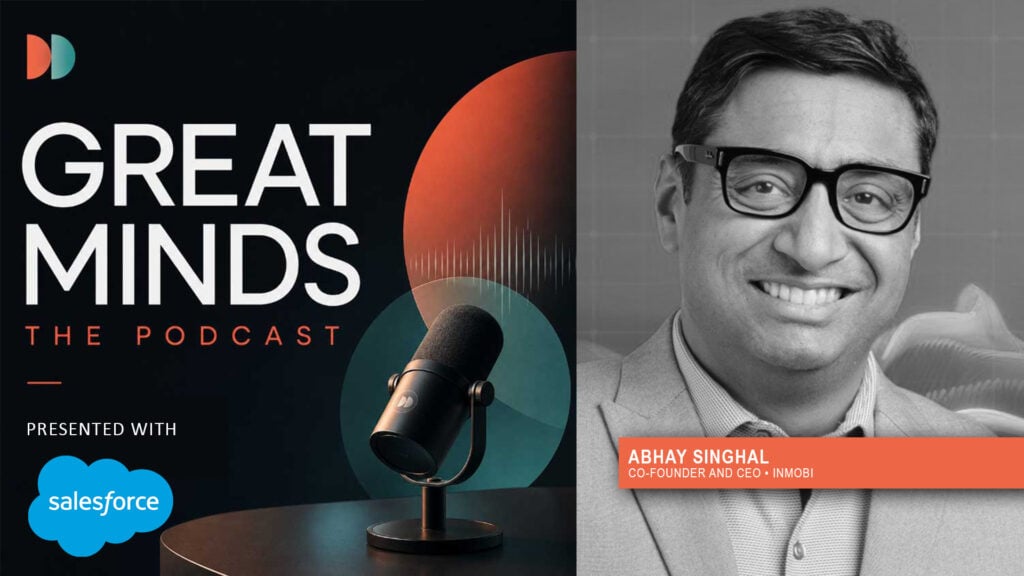
When the Customer Sends an Agent with Abhay Singhal of InMobi & InMobi Advertising
Joining us is Abhay Singhal, co-founder and CEO of InMobi Advertising. Abhay explains what he means by agentic advertising and where early experiments with conversational ads are taking the industry.