




Retail Media Needs DOOH Connectivity
By Ran Cohen, Chief Strategy Officer, Perion
When it comes to the “last mile” of marketing and advertising, brands are suffering from a huge gap. While 80% of purchasing still occurs in physical stores, 90% of retail media budgets go online. As a result, a huge portion of advertising investment is spent on people who aren’t immediately going to buy things – which means brands are spending most of their budget high in the purchase funnel.
Retailers suffer too. Instead of gaining additional revenue from brand advertising in-store, they are seeing that investment flow to digital channels.
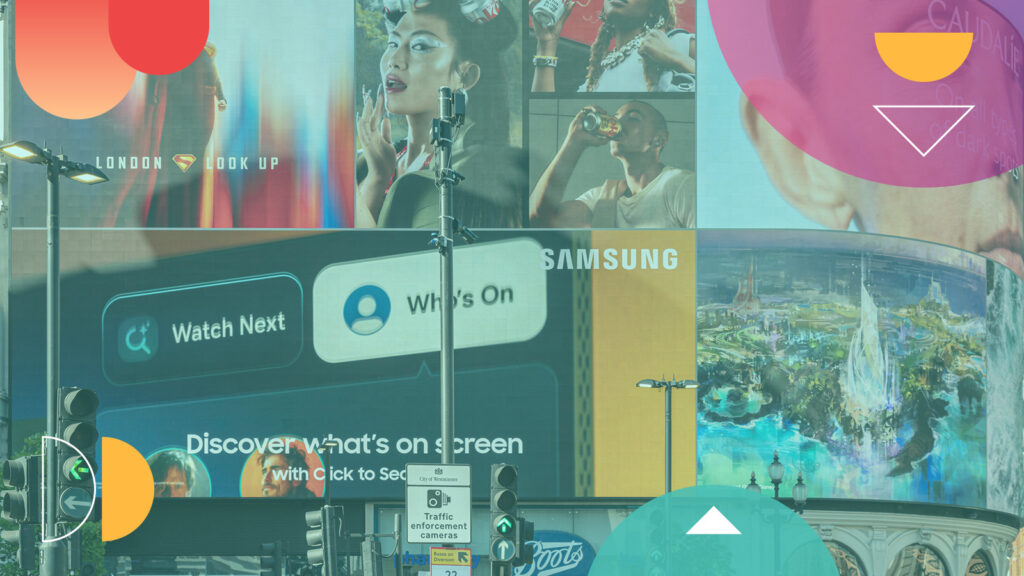
Digital out of home (DOOH) is in a position to bridge the gap. It promises targeting and measurement at the actual point of sale – the dream that advertisers have been waiting for. But simply adding screens in stores isn’t going to deliver a full solution. Retailers need to think about transforming what is largely a collection of outdated in-store networks into connected media assets that are data-driven and measurable. In essence, the next wave of targeted retail media needs to be in physical retail spaces.
Higher Value Retail Media Opportunities
Brands obviously know that most shopping still happens in stores, but the lure of targeting and measurement on digital channels is too great. If they are able to know for sure that they are getting ROI from digital, they’d rather spend there. However, these brands are missing a significant opportunity – in-store and outdoor digital screens tightly integrated into unified offerings.
The retail media industry has crossed a critical threshold. Global retail media ad spend reached approximately $175 billion in 2025 and is projected to hit $197 billion in 2026, which represents 16% of all worldwide advertising spend. Despite this explosive growth, in-store digital media and screens along high-traffic routes near key shopping areas remain dramatically under-penetrated.
The challenge is not lack of demand, but lack of infrastructure, connectivity and data. Improving in-store and local digital signage is essential for modernizing advertising opportunities for brands and proving real sales impact. The good news is that the high cost of hardware is decreasing rapidly and quality is increasing with the introduction of new LED screens. Retailers must transition to these new dynamic, high-resolution screens that offer real-time updates and interactive, personalized content if they want to unlock the opportunity of retail media demand.
Learning From Early Leaders
Some retailers have invested in smart DOOH and they can serve as a blueprint for other retailers hoping to capture advertiser demand.
Walmart Connect integrates in-store TV networks, smart displays, and digital audio. They are able to target 150 million weekly shoppers to deliver hyper-targeted, real-time ads on in-store screens. They also bridge online and in-store by connecting physical store data with online behaviors, allowing advertisers to target shoppers in physical retail spaces and retarget them on other channels including CTV and social media.
Kroger combines their “84.51˚” data science offering and loyalty card program to connect consumers to brands both online and in-store. They also have upgraded to smart displays including cooler screens and digital endcaps, enabling brands to display ads based on real-time inventory and consumer data.
Even with smart screens and targeting options, many brands are focused specifically on “outcomes” and want to make sure they aren’t just spending money when shoppers were already planning to buy their products anyway. Retailers such as Albertsons have data partners to measure actual lift from DOOH. This area is ripe for continued improvement with innovations like smarter POS attribution and sensor-based footfall.
Creating a Vision
Retailers should have a goal enabling brands to reach high-intent shoppers at the precise moment of purchase decision, with measurable, closed-loop attribution tied directly to POS sales data, something few digital channels can replicate.
They don’t have to invest billions in smart screens and huge data assets to do it. Rather, with the right strategic upgrades and partnerships, they can tap into the larger DOOH ecosystem that is already evolving in this direction. Connected screens positioned in high-value areas, targeting capabilities and the ability to measure incremental lift are the three keys to a successful bite at the “last mile.”
You May Also Like
Live Nation Backs New Creator-Economy Company Creator Nation
Live Nation is expanding its involvement in the creator economy, backing a new company designed to acquire, support and scale creator-management firms and adjacent businesses.

The Programmatic Stack Has Become Too Complex. AI Could Finally Simplify It
For three decades, digital advertising has added technology layers in the name of efficiency. The result is a programmatic ecosystem that can be remarkably sophisticated — and remarkably inefficient.
The Next Generation of Media Networks Starts with Infrastructure
As more brands turn customer relationships into media businesses, AI-ready infrastructure will determine which companies can transform audience data into intelligent, measurable commerce experiences.