




The Dark Funnel of Commerce: Why Brands Are Losing Visibility Where It Matters Most

By Ian Brodie, CEO, Levanta
For years, marketers have optimized for what they can see: impressions, clicks, conversions, attribution models neatly tying it all together. But that tidy version of the customer journey is becoming increasingly disconnected from reality. Today, a significant share of purchase intent is forming in what I’d call the dark funnel of commerce – spaces that are largely invisible to traditional measurement but incredibly influential in shaping consumer decisions.
Think about where people actually discover products now. It’s not just through paid ads or search queries. It’s happening in TikTok comment sections, Reddit threads, private group chats, Discord servers, and creator communities. In fact, 87% of shoppers discover products through these channels. These are environments where consumers are actively researching, validating and debating what to buy, long before they ever click “add to cart.”
But when it comes time to convert, many of those same consumers migrate to a completely different platform, most often Amazon. That gap between where intent is built and where transactions happen is the dark funnel. And it’s growing.
Commerce Is No Longer Linear
The traditional funnel – awareness, consideration, conversion – was always a simplification. Today it’s almost irrelevant as consumers move fluidly across platforms, devices and communities. AI has officially entered the buyer’s journey, influencing everything from product recommendations and search results to purchase confidence itself. A shopper might discover a product through a creator, ask an AI assistant for recommendations, validate it through peer discussion, revisit it days later via search and ultimately purchase it on a marketplace optimized for convenience and trust.
The fundamental challenge is that most of these discovery environments are either untrackable or only partially trackable. A product might go viral on TikTok, gain traction through Reddit discussions and be shared across dozens of private conversations, but by the time the purchase happens on Amazon, none of that upstream influence is visible in the data. Brands may over-invest in bottom-funnel tactics that appear to “perform,” while underestimating or completely missing the channels that are actually creating demand in the first place.
Consumers are no longer moving through a linear path guided primarily by brand messaging. Instead decisions are shaped by a constantly shifting mix of creators, algorithms, AI assistants, online communities, review platforms, Reddit threads, TikTok comment sections, private group chats and marketplace search results. Influence is now distributed across dozens of micro-moments that happen in real time and often outside the visibility of marketers themselves.
Why This Matters Now
The rise of short-form video, creator-driven commerce, AI search and community-led discovery has accelerated this shift dramatically. Algorithms are surfacing products organically, consumers are placing more trust in peer recommendations than in brand messaging and private sharing, arguably the most powerful form of endorsement, is completely opaque. At the same time, marketplaces like Amazon continue to dominate conversion. They are the final destination even when they are not the origin of demand.
For brands, this creates a strategic disconnect: you can see where revenue happens, but not necessarily where it starts.
Rethinking the Role of Creator and Commerce Media
This is where commerce media needs to evolve. If brands continue to let paid media dominate their focus, they risk optimizing for capture rather than creation, harvesting demand without investing in how that demand is generated. The opportunity is to bridge the dark funnel by building a more holistic understanding of influence.
That means:
- Investing in creator and community ecosystems where authentic discovery happens
- Aligning marketplace strategies (like Amazon) with upstream demand generation efforts
- Leveraging partners and platforms that can connect off-platform influence to on-platform performance
The goal isn’t to perfectly map every touchpoint; that’s increasingly unrealistic in a world where discovery happens across fragmented, often private environments. Trying to stitch together a complete, deterministic view of the customer journey can quickly become a losing game, consuming time and resources without delivering meaningful clarity. Instead, the smarter approach is to align your strategy with how consumers actually behave, not how legacy attribution models say they should behave. It means recognizing that a spike in branded search or marketplace conversions may be the result of momentum built elsewhere, through creators, communities, and conversations you can’t directly track. In practice, this shifts the focus from precision to pattern recognition. Are you seeing increased demand following creator activations? Are certain communities consistently driving lift, even if you can’t tie every conversion back to them? Are your marketplace performance trends moving in sync with off-platform buzz?
Brands that win in this environment will be the ones that embrace a more integrated view of commerce: one that recognizes that discovery is decentralized, trust is community-driven, and conversion is often platform-specific. They’ll invest in partnerships, platforms, and measurement approaches that help them understand directionally what’s driving growth.
The dark funnel needs to be strategically navigated and understood. Because if you’re only measuring what happens at the point of sale, you’re missing the majority of the story.
You May Also Like

Inside a Student-Run Ad Agency (Spoiler Alert: Its Clients Include Siemens)
The fundamentals of standout advertising are cross-generational. A great ad shows the personality of the company while clearly communicating — in authentic ways — what makes it worth supporting.

CTV Has an Ad Load Problem. Smart TV Gaming Is the Way Out.
Smart TV gaming opens the world of big-screen to advertisers, making it manageable and scalable in a way it never was a console-based ecosystem.
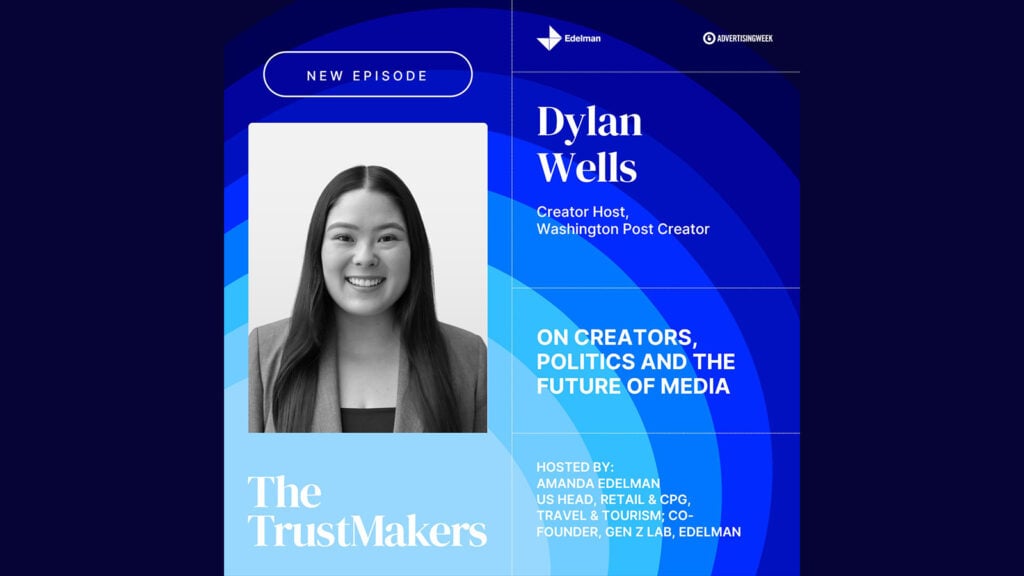
The Washington Post’s Dylan Wells on Creators, Politics and the Future of Media
Dylan Wells, inaugural Creator Host at Washington Post Creator, the Washington Post’s new division focused on the creator economy, joins Edelman’s Amanda Edelman to unpack the increasingly blurred line between creators and traditional media.