By Kristen Jackman, SVP, Westfield Rise US
For years, media and experiential marketing ran on separate tracks, one dedicated to scale, the other to emotion. But as Gen Z becomes the most influential segment of the attention economy, those tracks are colliding fast. This generation isn’t rejecting digital media; they’re rejecting anything that feels passive or disconnected from the world around them. Instead, they’re seeking experiences that feel tangible, communal, and share‑worthy.
Recent Eventbrite research makes the shift unmistakable: 73% of 18–35 year olds plan to attend a live event in the next six months, and 84% of interest based attendees have formed close friendships at these gatherings. These environments are moments where online interests move offline and become real world identity and community.
For marketers, that changes the job. It is no longer about manufacturing reach; it is about manufacturing participation and doing so in ways that blend physical environments with high impact media and digital amplification.
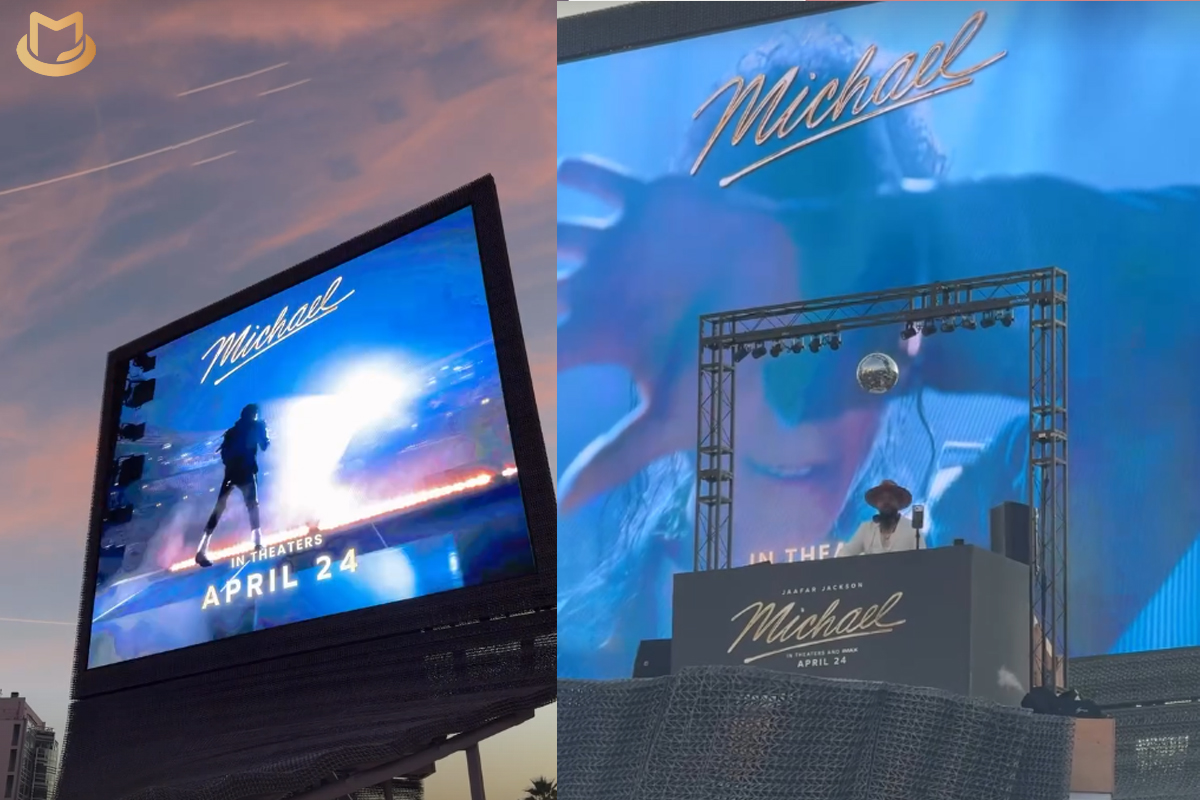
Photo credit: MJvibe.com
Lionsgate recently turned Sunset Boulevard into a Michael Jackson street party with an electrifying promo stunt in promotion of the studio release of Michael, which is a great example of the impact of experiential media.
PARTICIPATION IS THE NEW REACH
Digital Out of Home (DOOH) has emerged as a critical driver of this shift. According to the OAAA and The Harris Poll, 73% of consumers view DOOH ads favourably, and 76% have recently taken action after seeing one, making DOOH the most action driving medium across all major channels. ‑of‑Home (DOOH) has emerged as a critical driver of this shift. According to the ‑driving medium across all major channels.
Nielsen’s Brand Impact research backs this up, showing that DOOH campaigns can generate 3.6× higher unaided awareness year-over-year, and meaningfully increase purchase intent across key markets.
But the real unlock happens when DOOH pairs with live experience. When a brand creates an IRL moment that audiences organically document and share, and supports it with high impact DOOH, the campaign moves beyond exposure and into cultural participation.
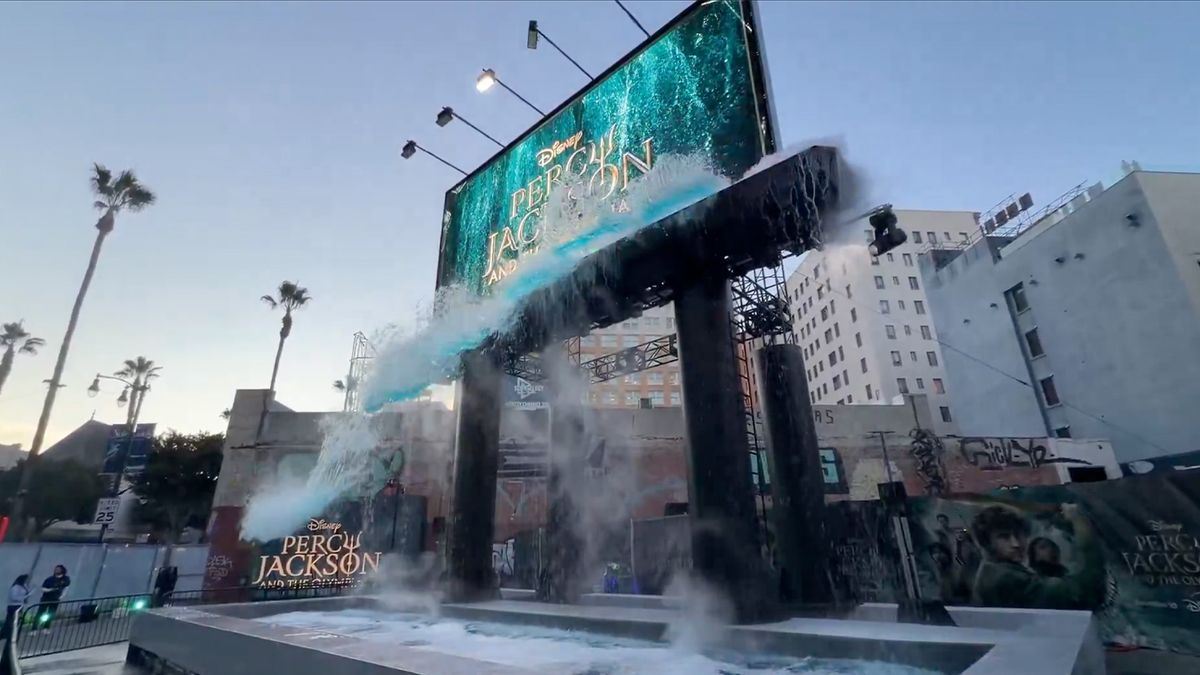
Photo Credit: Disney/Discussing Film)
Disney+ Percy Jackson 4D Billboard — DOOH as public spectacle
Disney’s immersive Percy Jackson and the Olympians billboard at Hollywood & Vine redefined what OOH can be. By integrating synchronized water effects, mist bursts, and narrative driven visuals, the billboard became a real-world content drop that crowds filmed and shared. It was a piece of street level entertainment and a blueprint for how DOOH can drive earned media at scale.
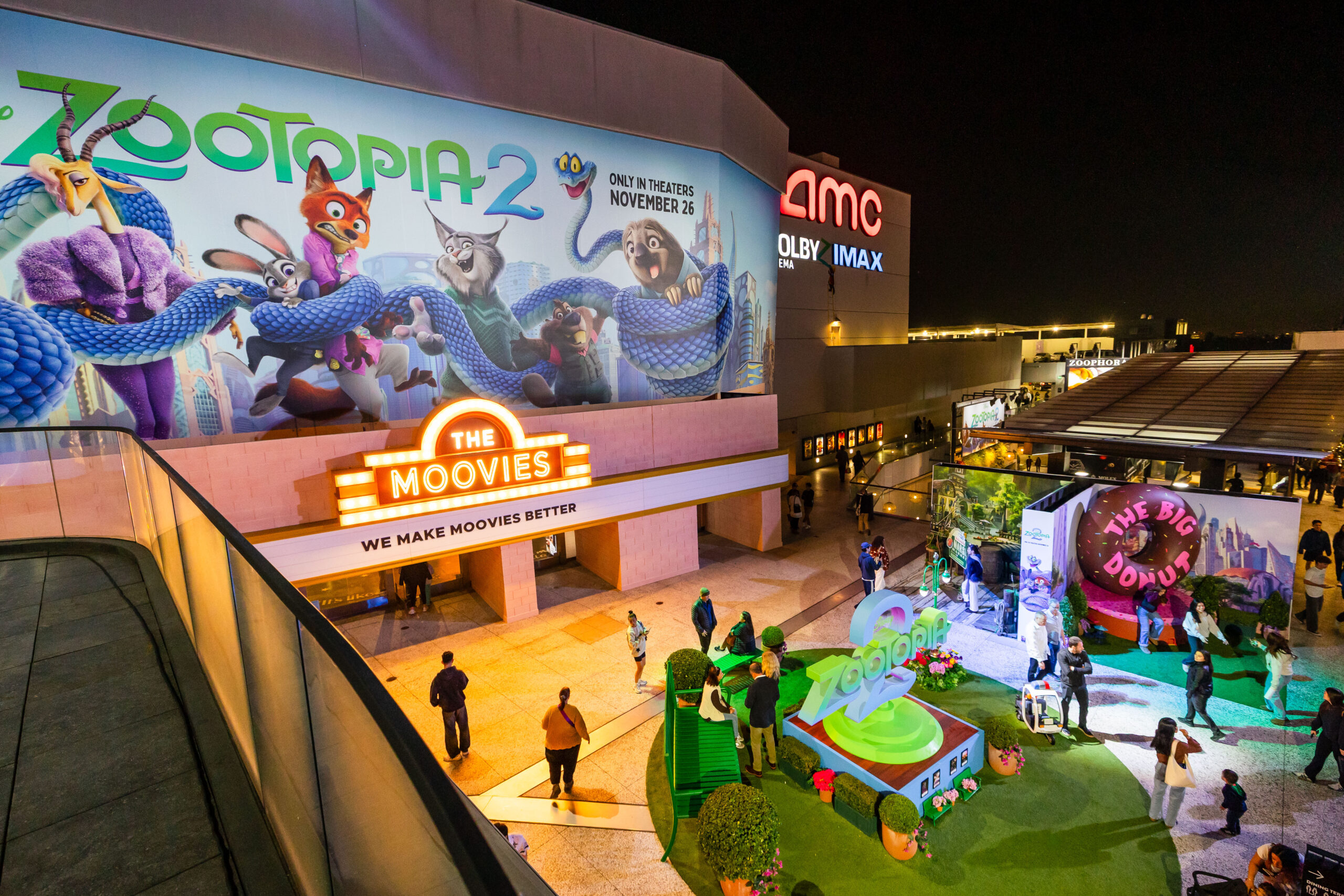 Zootopia 2 at Westfield Century City — A 360° world
Westfield Rise partnered with Disney and Snap to transform AMC Plaza into a fully realized Zootopia streetscape, complemented by Snap‑powered AR lenses. Families interacted with characters, immersive sets, and on‑site play zones, while Disney executed a broader citywide OOH and AR rollout.
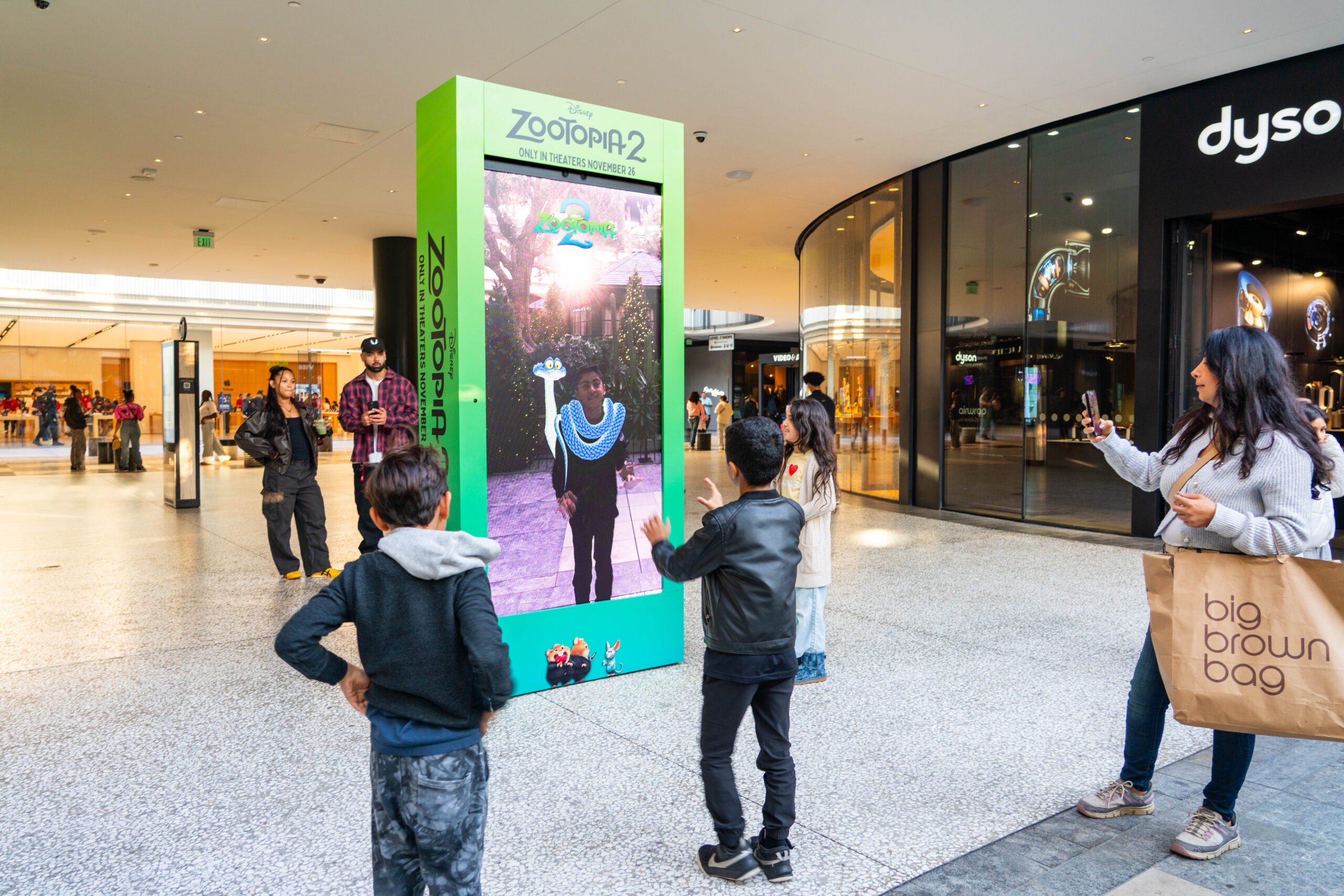
(Zootopia AR)
Marketing Dive reports the campaign also included a Snapchat “Snapcat” cameo inside the film, and Snap data shows such campaigns can drive ~79% incremental lift in ticket conversions. The activation demonstrated the power of combining physical space, DOOH storytelling, and social technology to extend cultural resonance.
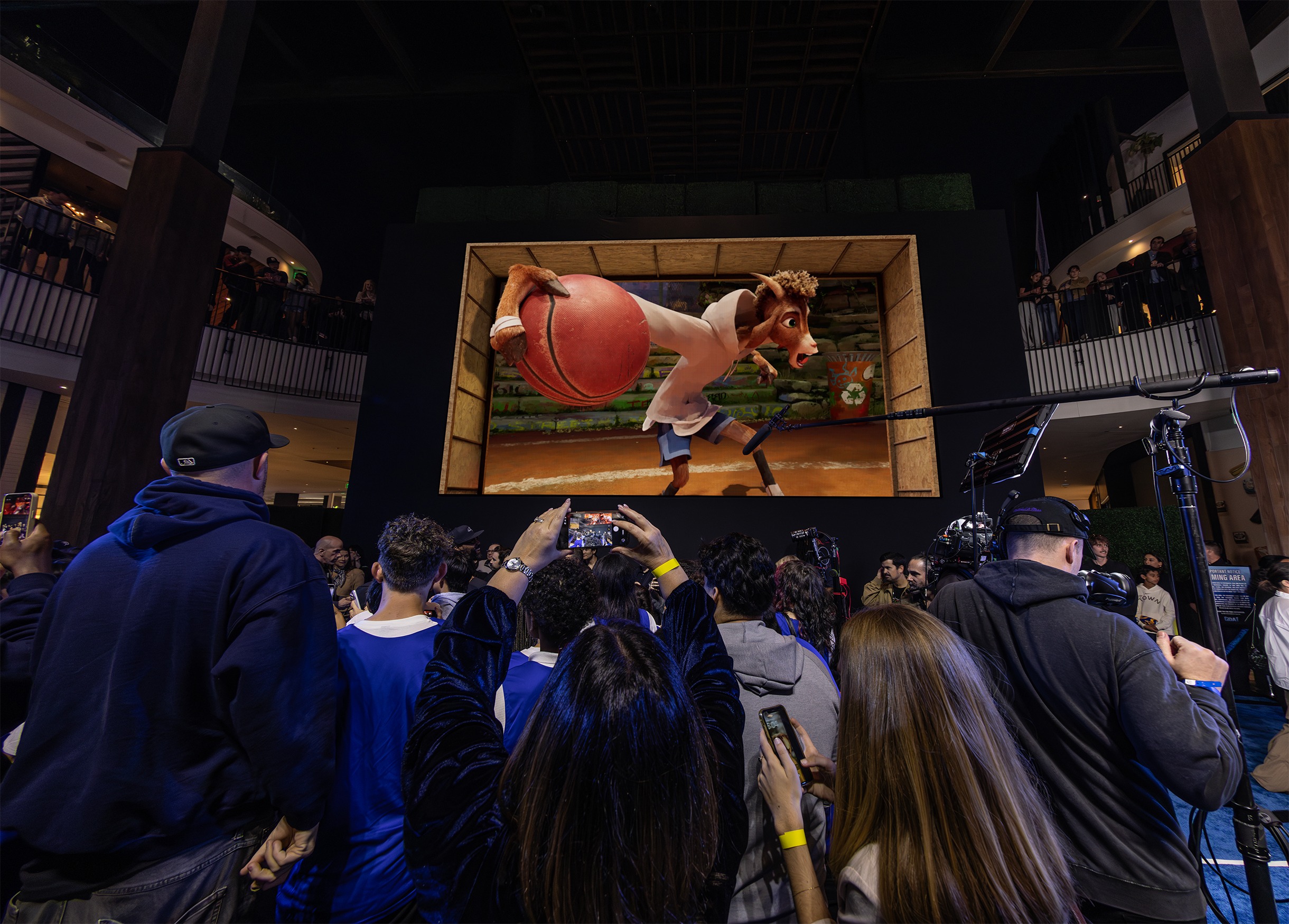 Sony’s GOAT Premiere — A Public, multi‑level fan experience
The GOAT world premiere at Westfield Century City debuted The Centurion, a new, large‑format Atrium LED backdrop that delivered cinematic trailers and 3D content at scale. Thousands of fans viewed the premiere from multiple levels, sponsor activations added interactivity, and Sony partnered with the Boys & Girls Clubs of America to bring community into the experience. By turning a red carpet into a public spectacle, Sony gained earned reach far beyond traditional premiere circulation.
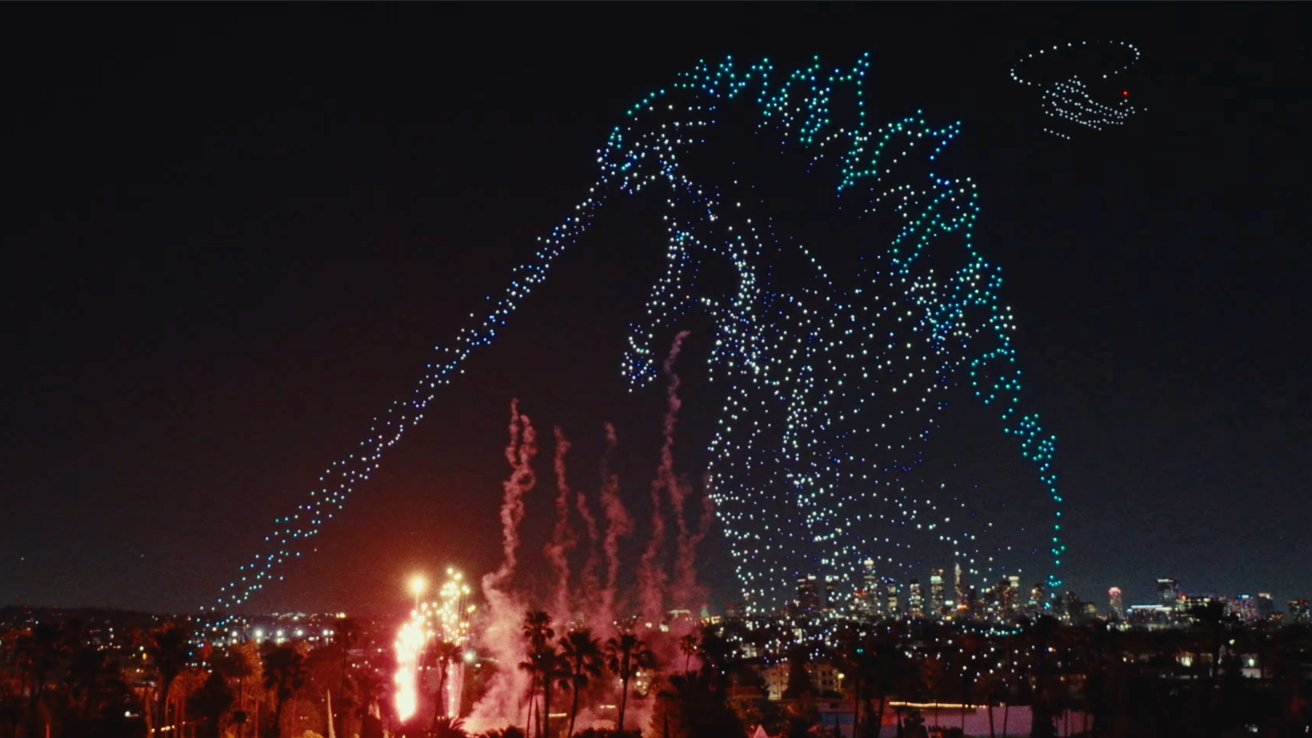 “Experiential and digital marketing have effectively merged—today the most powerful brand activations are designed to be experienced live and shared globally,” says Cheryl Smith, Chief Executive Officer of ShowPro. “Our drone activation for Apple, promoting Monarch: Legacy of Monsters, turned the sky into a storytelling canvas, creating a live spectacle that also became a highly shareable moment across social platforms. The result blended physical participation with global reach, turning a live experience into media that travelled far beyond the drones themselves.”
DESTINATION PLATFORMS ARE NOW CULTURAL INFRASTRUCTURE
Retail destinations are now functioning as modern social infrastructure. Capital One Shopping’s foot‑traffic analysis shows 73% of Gen Z visit malls monthly, with 82% citing socializing as their primary purpose.
Westfield Century City, in particular, offers:
- 18,000+ sq. ft. of event‑ready space, including a multi‑level Atrium with theatrical lighting and truss systems
- A suite of large‑format digital canvases, including the new Centurion LED screen for immersive content delivery
- Audience patterns that reward “big moments” with natural footfall, dwell, and social capture
For entertainment and brand partners, that combination of infrastructure and audience makes Westfield a uniquely powerful stage for cultural launches.
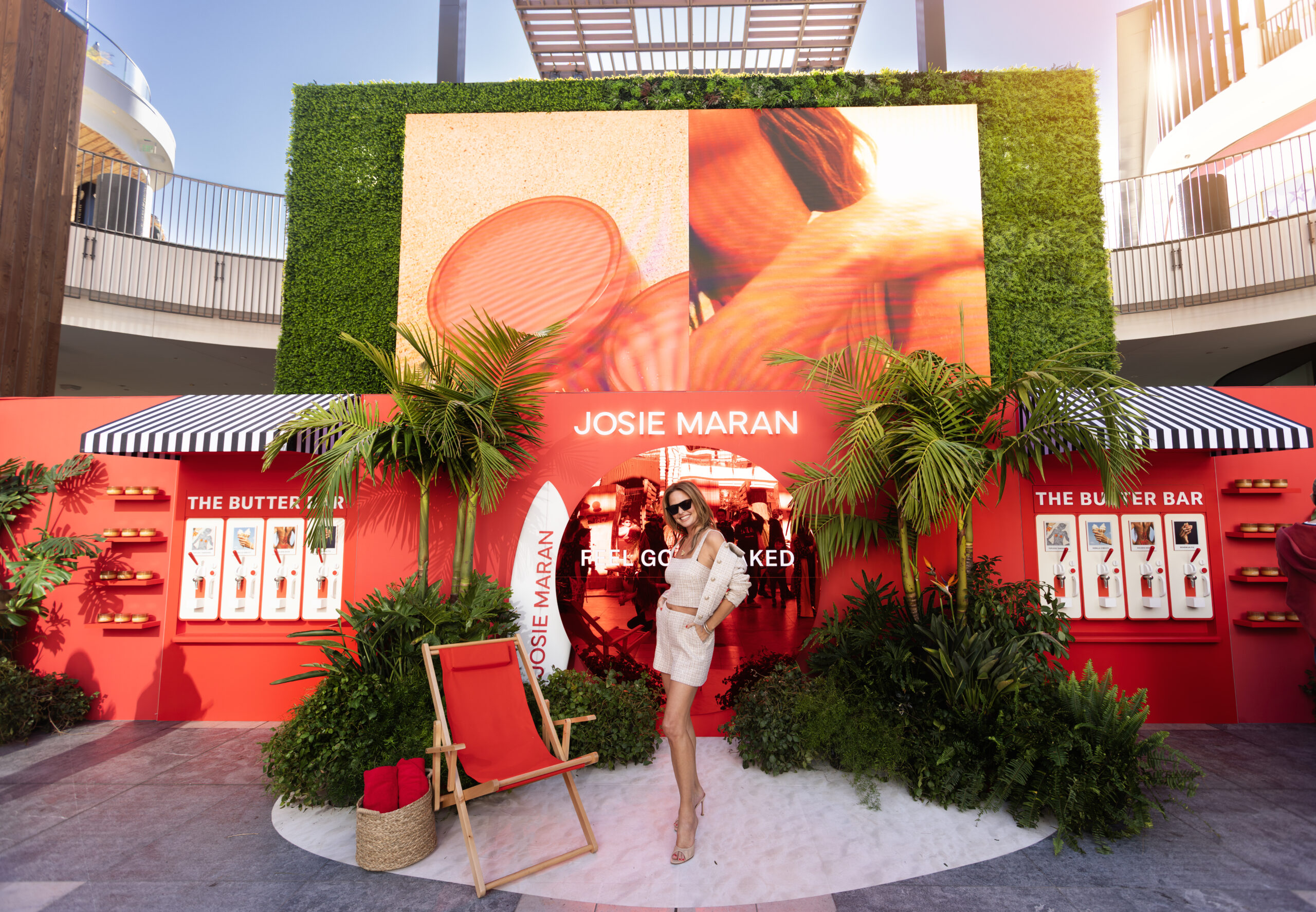 (Josie Maran, Westfield Century City)
WHAT MUST BRANDS LEARN FROM THIS?
When media and experiential are architected together, brands unlock a multiplier effect spanning:
- Live participation and dwell
- Social amplification and UGC
- Earned media
- Trust and affinity lift (71% among Gen Z)
- Stronger consideration and commercial outcomes (DOOH’s industry‑leading action rate)
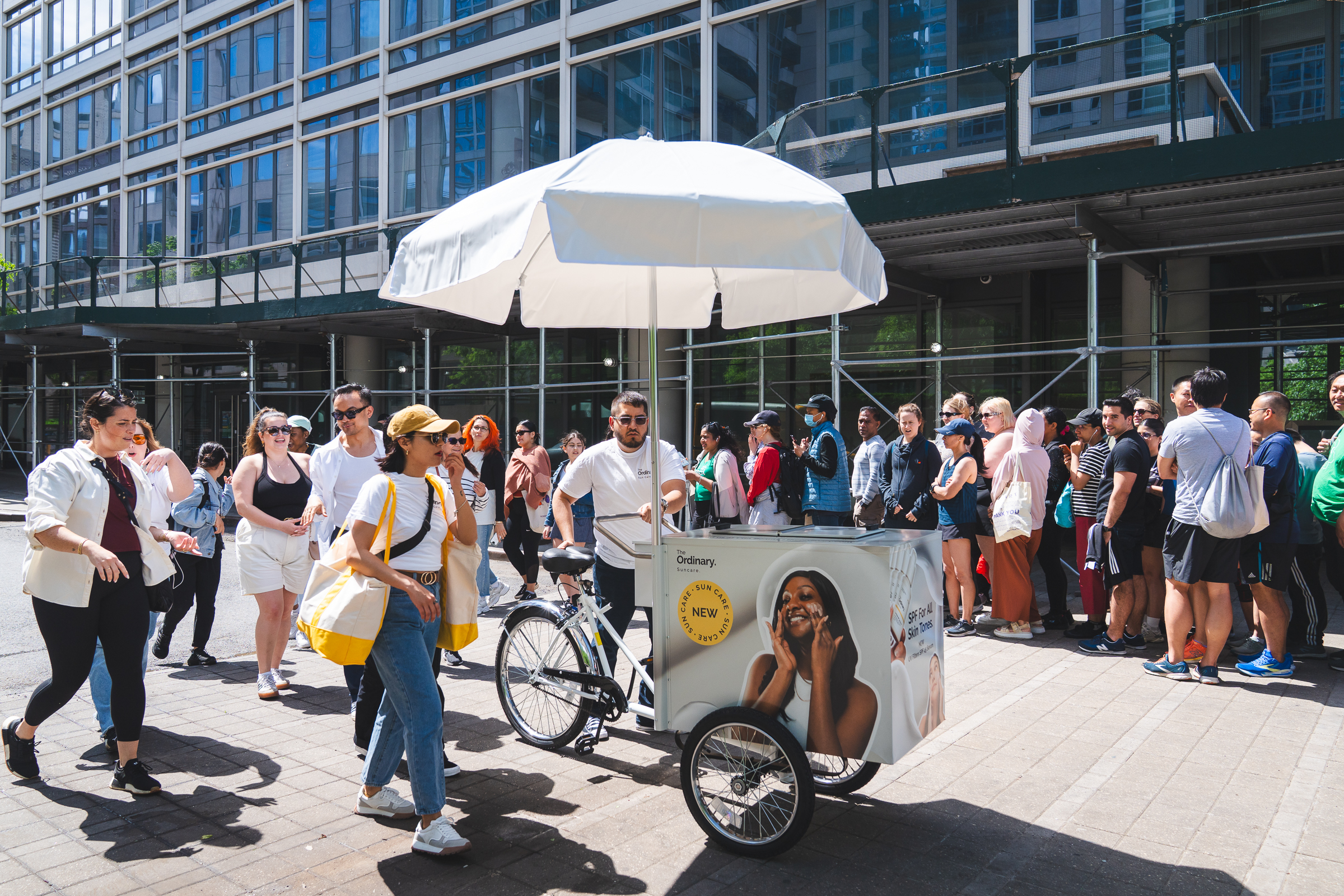 (Quan; The Ordinary)
“Brands are increasingly prioritizing IRL experiences because nothing compares to connecting one-on-one with consumers in an immersive, tactile environment,” says Brian Rappaport, CEO of Quan Media Group. “When audiences can truly interact with a product, the impact goes far beyond awareness. It builds community, strengthens brand equity, and, most importantly, earns trust. We consistently encourage our clients to push their creative boundaries and fully lean into the power of experiential.”
The overarching lesson is simple, the most effective campaigns don’t ask whether something is “media” or “experiential.” They ask whether it creates a moment people want to step into and carry with them.
Because when media becomes the moment, attention isn’t bought. It’s earned.