




The $1 Trillion Ad Industry Is Flying Blind. AI Twins Can Fix That

By Dr. A.K. Pradeep, CEO and Founder of Sensori.Ai
Global advertising spend is projected to surpass $1 trillion in 2026. Generative AI now produces content at the speed of thought. And yet, for all this investment and firepower, the marketing industry still can’t reliably answer its most basic question: does any of it actually work?
The dirty secret is that most creative testing is broken — not just slow, but structurally misaligned with how human decisions are actually made.
I know this because I built one of the most sophisticated alternatives to it. I founded Neurofocus in 2006 because surveys and focus groups weren’t capturing how consumers’ brains truly responded to content. Neurofocus was acquired by Nielsen and became its Consumer Neuroscience division, measuring neurometric responses through EEG recordings, eye tracking, and biometric data. It was, at the time, the most rigorous tool the industry had.
It’s now an anachronism.
The deeper problem with legacy research — surveys, focus groups, even neuroscience panels is that they capture what people believe they think, not what actually drives their behavior. Human decision-making is largely nonconscious. Consumers rationalize their reactions after the fact, translating instinct into coherent-sounding explanations. Research that depends on those explanations is capturing the story, not the signal.
And that gap is now an industry crisis. A modern campaign can involve hundreds of creative variations across channels, formats, and audience segments. Testing each one through conventional methods — which require time, budget, and small sample sizes — isn’t just slow. It’s impossible at scale.
The Fake Twin Problem
The emerging alternative is AI-generated synthetic consumers: digital models trained on behavioral and psychological data that simulate how different audience profiles respond to creative work before it ever reaches the public. The premise is compelling. The execution is where most approaches fail.
The common shortcut is to ask ChatGPT to imagine twenty personality types and predict their reactions to a piece of content. I’ve seen this pitched as a “digital twin” methodology. It isn’t. These models have no memory. They react to a prompt in isolation and reset. Real consumers don’t work that way.
We are shaped by accumulated experience — the news cycle, family dynamics, cultural shifts, biological aging, and the emotional salience of specific memories. Ask anyone in a long relationship how their partner recalls a throwaway comment from years ago. That’s not a quirk. That’s how human decision-making is built.
Genuine synthetic consumers must be constructed differently: trained on large behavioral datasets, embedded in a real-time cultural context, and allowed to evolve. Think less chatbot, more character development. The analogue is building a fully realized character for a video game or screenplay — one whose reactions change as their world changes.
When built correctly, the payoff is significant. Hundreds of creative variations can be stress-tested in hours rather than weeks. Audience response can be modeled before a dollar of media spend is committed. And perhaps most importantly, these models surface the nonconscious drivers of behavior — desire, trust, identity — that surveys are structurally unable to reach.
Shifting the Timing of Insight
The deeper shift here isn’t technological. It’s temporal.
For decades, creative testing has been something that happens after the work is done — a validation exercise, at best. By the time research arrives, budgets are committed, campaigns are in market, and creative missteps are visible to everyone. Simulation moves insight upstream, into the creative development process itself, when there’s still time to act on it.
In a world where AI can produce thousands of creative assets in the time it used to take to produce ten, that timing shift is the whole game. The brands that win won’t be the ones generating the most content. They’ll be the ones who can quickly and accurately predict which content will connect — and why.
The $1 trillion question isn’t how to make more. It’s how to finally know what works.
About the Author
Dr. A.K. Pradeep is CEO and Founder of Sensori.Ai and the founder of Neurofocus, acquired by Nielsen.
You May Also Like

The Modern Marketer’s Guide to Growth Due Diligence in Tech M&A
Growth due diligence is not just a risk mitigation exercise. It is how you discover immediate, post-acquisition value creation opportunities.
Is AI Pushback Driving User Acquisition Away From the Platforms?
As effective as Meta and Google are in finding and converting users thanks to their scale and technology, research shows that optimal performance comes from broader campaigns, including the open web.
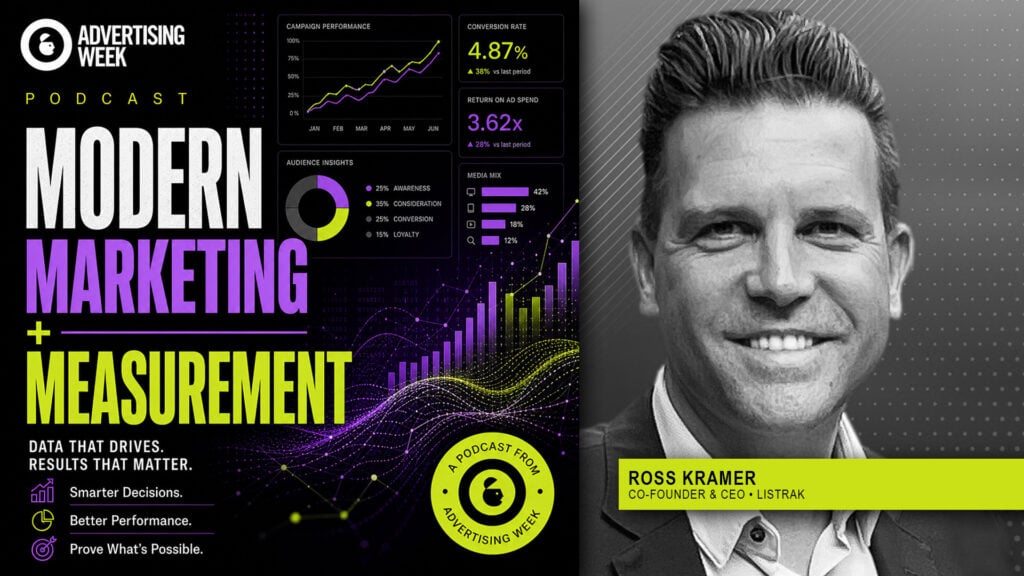
The Computer Has Eyes So Fix Your Discoverability with Ross Kramer, CEO & Co-Founder of Listrak
Today’s guest is Ross Kramer, Co-Founder and CEO of Listrak, a digital marketing platform for retailers and brands. A unified customer profile is necessary for creating better personalization, but Ross also breaks down how AI agents are changing product discovery, and why being discoverable now goes beyond traditional SEO. As Ross puts it, “computers have eyes,” which means if AI is doing the shopping, brands have some new rules to learn about getting found.