
By Laurence Thomson, Joint Global Chief Creative Officer, M+C Saatchi Group
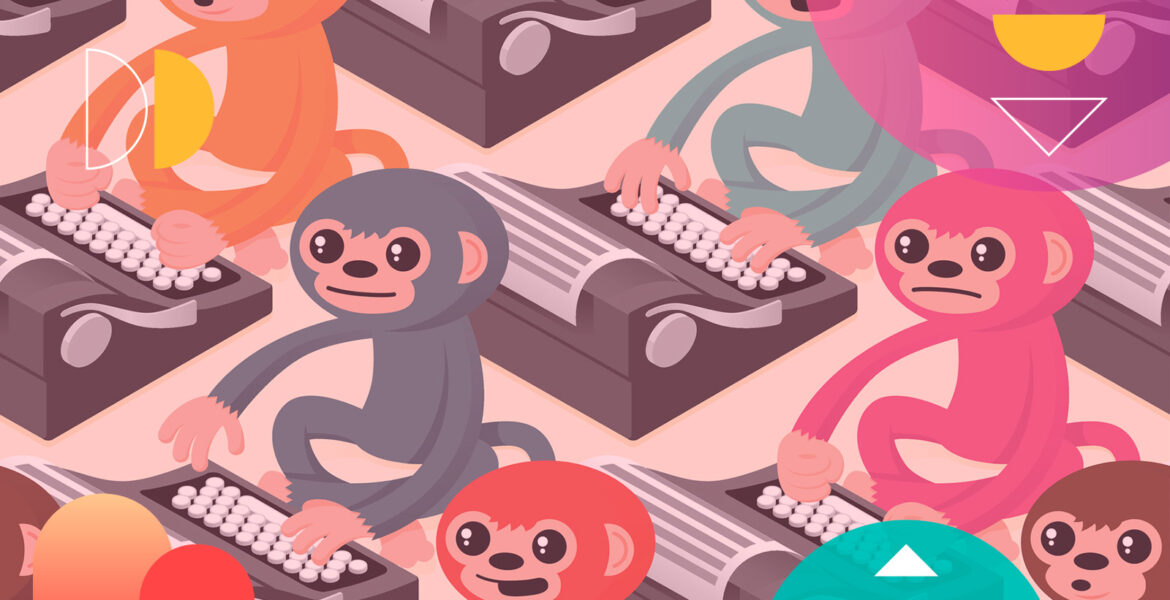
There’s a theory – Borel’s infinite monkey theorem. Given infinite time and infinite typewriters, a random process will eventually produce every book ever written.
Somewhere in that idea is something true about where we are now: an industry hammering away at infinite prompts, wondering whether what comes out the other side will be Shakespeare or just noise.
But first, is this really change, or just change at a different speed?
Because the technology changed overnight. The ad industry mostly didn’t. A lot of it still feels half-asleep. Hitting snooze while the ground shifts underneath it, and asking for seven more minutes.
I’ve always thought Pharrell’s Happy sounds faintly sad. Like someone staring into the mirror, insisting they’re fine while feeling anything but.
Maybe that’s just me.
Either way, parts of the industry have been doing exactly that. Smiling through it. Making safer work. Saying less. Shrinking toward the middle while the volume of content gets louder and louder. Whole sections of the industry waiting it out instead of responding to what’s happening around them.
And that’s where things start to blur into aesthetic taupe. Content as spam, advertising as noise, endless output flattening culture into something increasingly interchangeable.
But there’s another version of this story – the more interesting one.
The best early adopters aren’t using AI for AI’s sake. They’re using it in service of an idea.
Peter Jackson’s company used machine learning to isolate John Lennon’s voice from a damaged demo recording once thought unusable, helping create one final Beatles song. A piece of work that couldn’t have existed without the technology, yet still felt unmistakably human.
That’s not threat. That’s what happens when tools meet taste.
And maybe that tension is doing something useful to culture.
As AI pushes toward speed, scale and sameness, there’s also a visible pushback — a renewed appetite for craft. Work that feels deliberate. Considered. Almost defiantly analogue at times. You can see it in design, fashion, film and increasingly in advertising too. Gen Z’s resistance to the polished AI aesthetic feels less like nostalgia and more like instinct, even a little punk — a reminder that humanity rarely stays comfortable in the middle for long.
Even this year’s Super Bowl, advertising’s annual shootout, became a battleground for AI companies. Some of those campaigns were surprisingly self-aware, willing to joke about the very thing they were selling. That feels healthy. A little uncertainty – even a little chaos – has always been good for creativity.
Meanwhile, the entrepreneurial energy is real. There are more businesses actively trading in the UK right now than at any point in history.
The shape of the industry is changing. Smaller. Faster. More specialised. Global reach without the old infrastructure. The most interesting creative businesses right now aren’t the giant monoliths. They’re nimble, specialist-led, built around genuine expertise – performance, entertainment, social, purpose. They’re finding new collaborations, new models and new ways of working altogether.
Talent becomes a premium in that world. And with that comes genuine opportunity for the people and companies willing to lean into the change rather than flinch away from it.
The monkeys are at the typewriters.
Some of what comes out will be noise.
I’m here for more Hamlet. Not the cigars.