




Share of Search Is Dead. Share of Recommendation Is What Marketers Should Track Now.

By Julian Diep, Paid Acquisition Consultant, Blue Grid Media
Only 11% of cited domains overlap between AI engines. That changes everything about how you measure brand visibility.
For two decades, marketers had a clean answer to the question is my brand visible. The answer was share of search. You looked at search volume on your brand terms, compared it to your competitors, and called the trendline a proxy for awareness. It was imperfect, but it was a single number on a single platform, and everyone agreed it meant something.
That number is decaying as a measurement, and most marketing teams have not yet noticed how badly.
The reason is straightforward. A meaningful portion of the queries that used to land in Google now land in ChatGPT, Perplexity, Claude, Gemini, or Copilot. Those queries do not show up in Google Trends. They do not show up in your search console. And the answers people receive in those tools are not generated by ranking; they are generated by retrieval. Different engines retrieve different sources. Which means the same question, asked to two different AI tools, returns recommendations drawn from two different universes of cited domains.
How different? In a recent comparative audit across the four major AI engines, the overlap between any two engines on cited domains for the same set of prompts averaged around 11 percent. Said another way, roughly nine out of ten domains that ChatGPT recommends in a given topic are not the same nine that Perplexity recommends, or Claude, or Gemini.
Share of search treated visibility as a single number. The reality is now four or five different numbers, one per engine, and they barely correlate.
Why the engines disagree
The divergence is not random. Each AI engine has its own retrieval architecture, its own training data, and its own recency bias.
ChatGPT pulls from a mix of cached training data and live browsing through its search integration, which tends to favor authoritative editorial sources and recent journalism. Perplexity is built natively on retrieval, weighting fresh sources more heavily and citing them prominently. Claude relies more heavily on its training data with selective web retrieval, which can favor older established sources. Gemini, predictably, leans on Google’s own indexed corpus, which makes its citations look the closest to a traditional search engine result page.
The practical consequence: a brand that has worked hard to get cited by mid-tier trade publications is well-positioned in ChatGPT and Perplexity but may be invisible in Claude. A brand that ranks well in Google and gets pulled into Gemini may be a ghost in ChatGPT. The same brand can be top-of-mind in one engine and absent in another, in the same week, on the same query.
Marketers measuring share of search would see none of this. They would see a single number that says everything is fine, or fading, or growing, while the actual recommendation behavior across the engines is something far more granular and far more unstable.
What replaces share of search
The honest answer is that there is no single replacement metric, because the underlying landscape no longer supports one. What replaces share of search is an audit, run on a recurring cadence, that answers a different question: across the engines that matter, which is recommending us, for which queries, and against which competitors?
That audit is straightforward in principle. You define a set of representative buying-intent prompts for your category. You run them against each of the major AI engines. You record which domains get cited, in what position, with what framing, and where your brand sits relative to competitors. You repeat the cycle monthly, or whenever something material changes in the engines.
The mechanical work is tedious if done by hand. A free version of this audit, built to run automated scans across ChatGPT, Perplexity, Claude, and Gemini, lives at bluegridmedia.com/ai-visibility-scanner. The methodology matters more than the tool; what counts is that you run this on a schedule rather than once and forgetting it, because the engines update their retrieval behavior constantly.
The early signal nobody is pricing in
Here is the longer thread worth pulling on. Google’s own ranking system is not separate from the AI ecosystem; it sits inside it. There are early signals that Google is beginning to factor patterns of AI citation into its own quality assessments. A brand that gets cited heavily across LLMs on a topic appears to receive a quiet lift in Google’s organic rankings on related queries. The evidence is correlational and the mechanism is not public, but the pattern is consistent enough to be discussed seriously across SEO practitioner communities in 2026.
If that pattern holds, AI citation behavior is not just a measurement problem for marketers. It is becoming an upstream input to the ranking signals that have driven organic visibility for two decades. The brands that figure out how to be cited by AI engines first will see a downstream lift in Google. The brands that do not will find their organic visibility quietly eroding for reasons their dashboards do not explain.
What to do this quarter
Three concrete moves, in order of impact.
First, run an AI visibility audit. Whatever method you use, the point is to see, in writing, where your brand sits in each engine. Do not estimate. Do not extrapolate from your Google rankings. Run the audit and look at the actual citations.
Second, identify the gap. If you are cited well in Perplexity but absent in ChatGPT, the fix is usually about which kinds of sources cite you, not about your own site. AI engines cite the cited. Editorial mentions in the sources each engine trusts move the needle far more than on-page changes.
Third, build the habit. The engines update their retrieval. The competitive set shifts. The queries customers ask AI tools change as the tools get more capable. A one-time scan is a snapshot. The value is in the trendline, which only exists if you scan repeatedly.
Share of search is not coming back. The volume that used to flow through that single channel is now distributed across at least five engines that disagree with each other about who should be recommended. The marketers who notice this and start measuring share of recommendation, engine by engine, will have the next decade’s clear picture of brand visibility. The ones still tracking a single number will be optimizing for a metric that no longer describes the territory.
Julian Diep is a Paid Acquisition Consultant at Blue Grid Media, where he works with home service businesses on Google Ads and Local Services Ads strategy.
You May Also Like
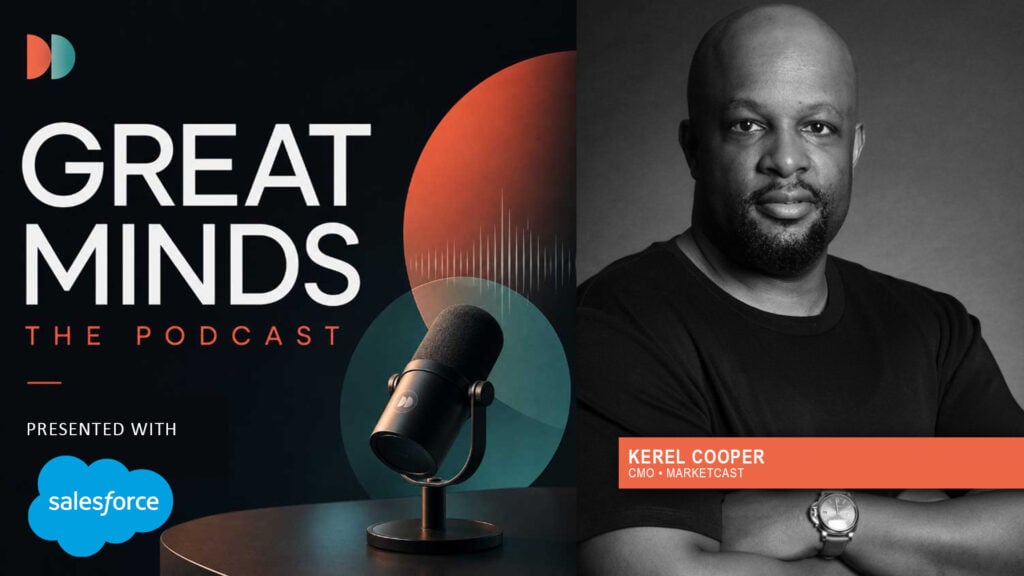
What the Dashboard Can’t Tell You About People Featuring Kerel Cooper of MarketCast
Joining us is Kerel Cooper, Chief Marketing Officer at MarketCast. Kerel shares why he believes marketers can learn from the strongest consumer brands and how human judgment should guide the use of AI in creative work.
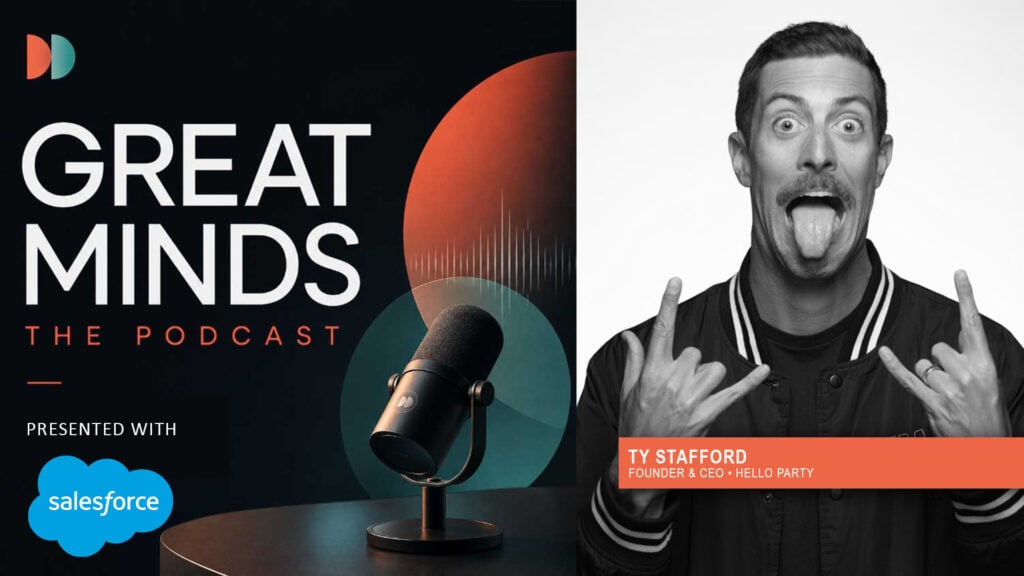
Would You Share It If You Didn’t Work Here? Featuring Ty Stafford of Hello Party
Joining us is Ty Stafford, Founder and CEO of Hello Party, whose experience spans making YouTube videos in his dorm room and working at Red Bull Media House.

From the Conference Floor to the Boardroom: How Kindle Scribe Is Changing the Way Executives Capture Ideas
At Advertising Week New York 2026, Amazon’s Kindle Scribe offers a glimpse into how business leaders are combining the familiarity of handwritten notes with the convenience of digital technology to make the most of an increasingly demanding professional world.