




The OOH Factor: Why Billboards Are Still Effective in the Digital Age
By Sarah Robson, Global Head of Advertising Effectiveness, On Device
Digital advertising formats are typically seen as serving a very different purpose to their analogue equivalents. While linear TV and print ads offer advertisers broad reach, for example, digital video and online display are chosen for their ability to provide more refined targeting and measurement.
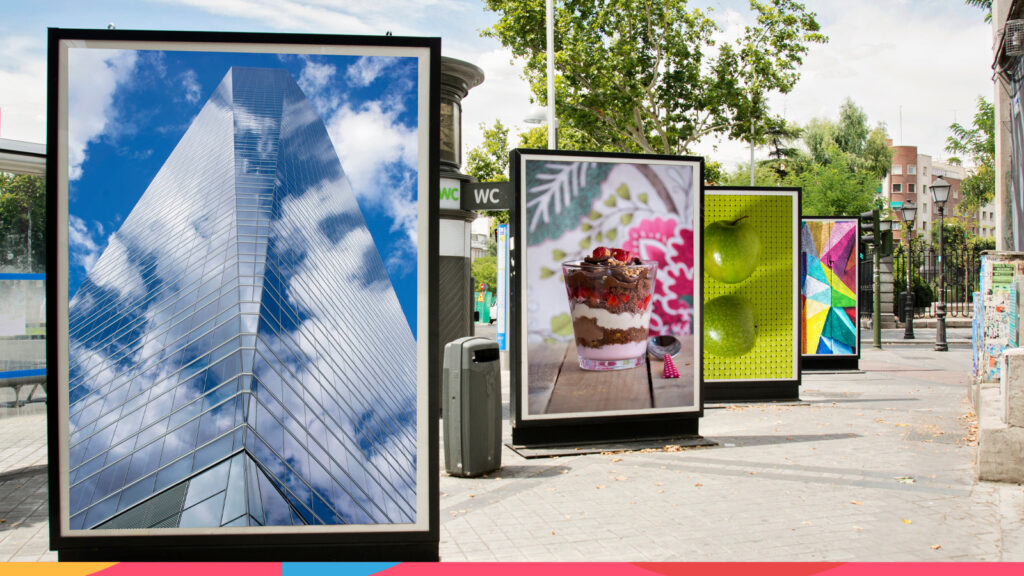
As a result, the traditional billboard could be viewed as a blunt tool in a digital age where precision rules. However, billboards are not only surviving in this new era, but thriving.
In the US, OOH revenues increased by 4.5% in the third quarter of 2025, marking the 18th consecutive quarter of growth. The figures for the UK over the same period were comparable. This shows that many marketers are still wise to the power of the billboard, and understand the important role this format has to play in their campaigns.
You can’t block a billboard
Today’s audiences are fragmented across channels and platforms, while brands continually fight for their attention, saturating their feeds with content. Against this backdrop, the billboard offers something unique; it is unmissable and can’t be skipped or blocked. And when used in tandem with digital channels, billboards can be the starting point of highly effective campaigns.
Take the now infamous BRAT billboards for example. When Charli XCX released the BRAT album in 2024, rather than a social-led campaign, she opted for a simple green billboard ad with the word ‘BRAT’. There were no other details on the ad, and no call to action.
As the BRAT summer progressed, new billboards arrived, using the same colour palette and typography, featuring the names of collaborating artists. Even into 2025, Charli XCX continued to experiment with the format, with a pre-Coachella ad featuring the word ‘BRAT’ but crudely scribbled out, as if suggesting the end of the BRAT era and the beginning of the post-BRAT age.
It was a masterclass in how physical advertising can generate digital buzz. The billboard was shared across social platforms with memes, challenges and other user-generated content. Its provocative style was debated by the music industry, and the campaign took on a life far beyond its simple, stark execution. This is the modern power of the billboard. It’s not a relic of pre-digital marketing, but a highly visible, culturally relevant format that digital audiences connect with and amplify organically.
Billboards reward bold advertisers
Billboards sit in the real world, embedded into our daily routines. As we travel around towns and cities, we see them, not in competition with reams of other scrollable content on small screens but unapologetically taking up space, repeatedly grabbing our attention and building familiarity.
The large-format nature of billboards amplifies their impact. Big ideas need space to breathe, and OOH offers brands a way to tell stories that can evoke emotional responses and create a lasting impression.
And there is an associated element of boldness and confidence to this channel too. As a consequence, consumers have high levels of trust in OOH advertising, according to research by Clear Channel and JCDecaux, with nearly half thinking of it as being more trustworthy than social media.
It’s also a highly effective format. OOH has been shown to upstage other channels in terms of ROI, with figures from Australia showing that combining OOH with digital campaigns delivered a 39% stronger ROI for budgets under $1 million compared to campaigns running on television alone.
How technical innovations have changed the role of the billboard
Innovations in outdoor advertising have expanded the possibilities of billboards for advertisers. This year we’ve seen three-dimensional builds such as Decathlon’s snorkel masks in the Netherlands, and DS Group’s living billboard in India incorporating 4,000 plants, for instance. These OOH campaigns are designed not just to be seen, but to spark debate and be shared on social media.
At the same time, digital tools are driving further engagement with billboards, such as QR codes tailored to specific locations, augmented reality overlays that unlock additional content, and social integrations that invite real-time participation. The billboard is still the foundation stone, but digital layers allow advertisers to achieve so much more.
As well as working in a complementary way to digital, billboards can now be a digital channel in their own right. Digital out-of-home (DOOH), and more specifically programmatic DOOH, gives advertisers even more potential to connect with consumers in a meaningful way. Programmatic DOOH means brands can adapt their creative concepts based on the time of day, location, weather, or other contextual signals. Its scale combined with precision, but without unnecessary tracking or use of personal data.
One of the best examples of effective OOH advertising in 2025 was McDonald’s Grinch Hijack campaign. Beginning with teasers that showed the traditional McDonald’s branding having been interfered with, the campaign moved on to drop bigger and bigger hints about The Grinch’s masterplan. The next phase involved a widespread DOOH and print activation across all of McDonald’s festive advertising, culminating in a special 3D billboard in London. The concept was strong and the execution brilliant, building anticipation and incorporating shareable features and DOOH elements to great effect.
Smart marketers understand the OOH factor
Billboard advertising doesn’t have to mean a straight choice between analogue and digital, or between scale and precision. The most effective marketers don’t see OOH as an awareness medium that needs to be backed up by social, display and digital video, but as a starting point that signals intent and creates a buzz for omnichannel campaigns.
In an industry that obsesses over attribution and short-term performance KPIs, and as advertising has become more technologically sophisticated, the value of simple, bold creative has rocketed. And sometimes, all it takes to dominate the conversation is one word, in the right place, in the real world.
You May Also Like

There Is No Such Thing as Creative Wearout
Conventional wisdom goes something like this: you produce a new piece of creative, you put media behind it, and over time the ad progresses through a predictable lifecycle.
Neala Brown, Global Head of Data, Measurement & Insights at Teads
AI may dominate the Advertising Week schedule, but Neala Brown, Global Head of Data, Measurement & Insights at Teads, wants to hear what happened after companies put it to work.

Oft-Neglected, Local Targeting Represents the Future of Advertising
By Evan Rutchik, President & Chief Strategy Officer, Viamedia.ai The promise of digital advertising is that the wealth of signals would allow advertisers to deliver one-to-one messaging, tailored to the individual […]